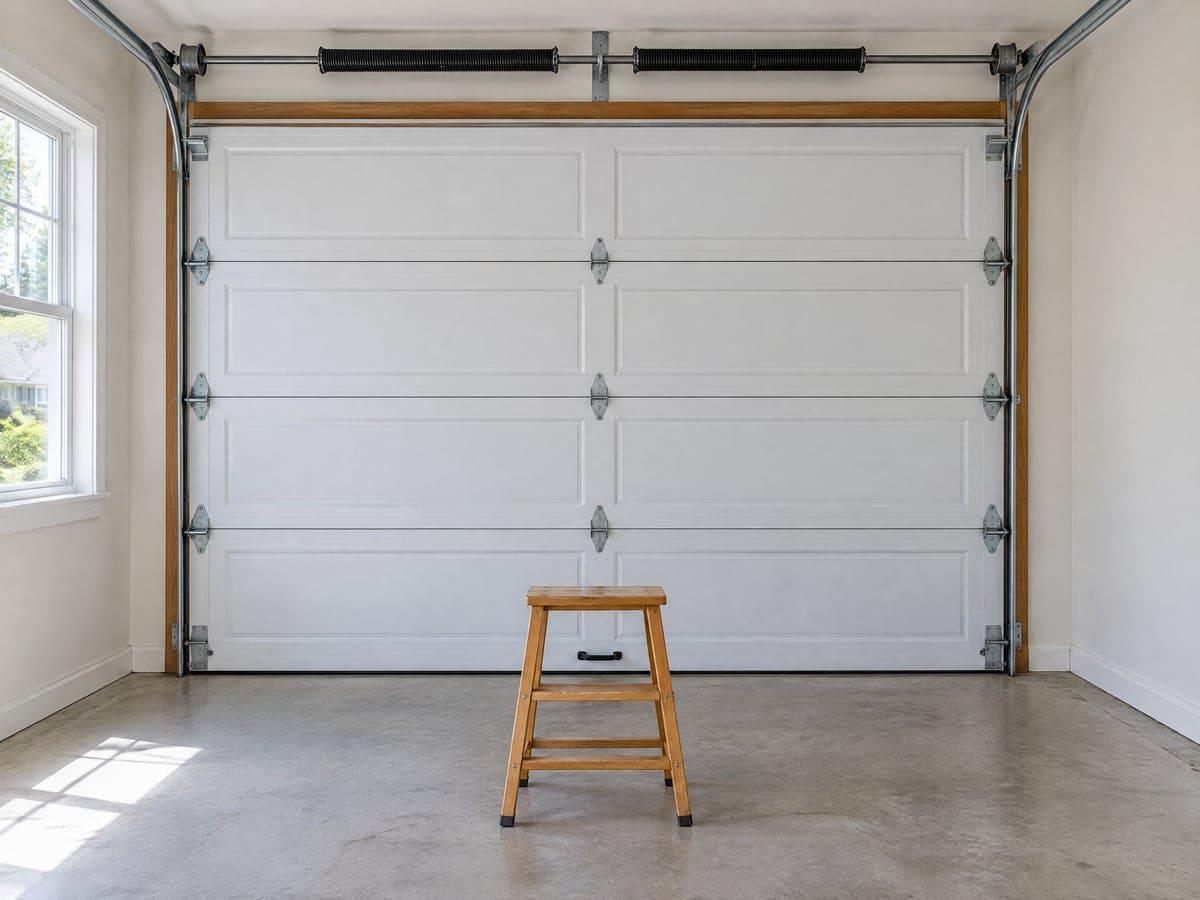
What is the door doing when it makes noise?
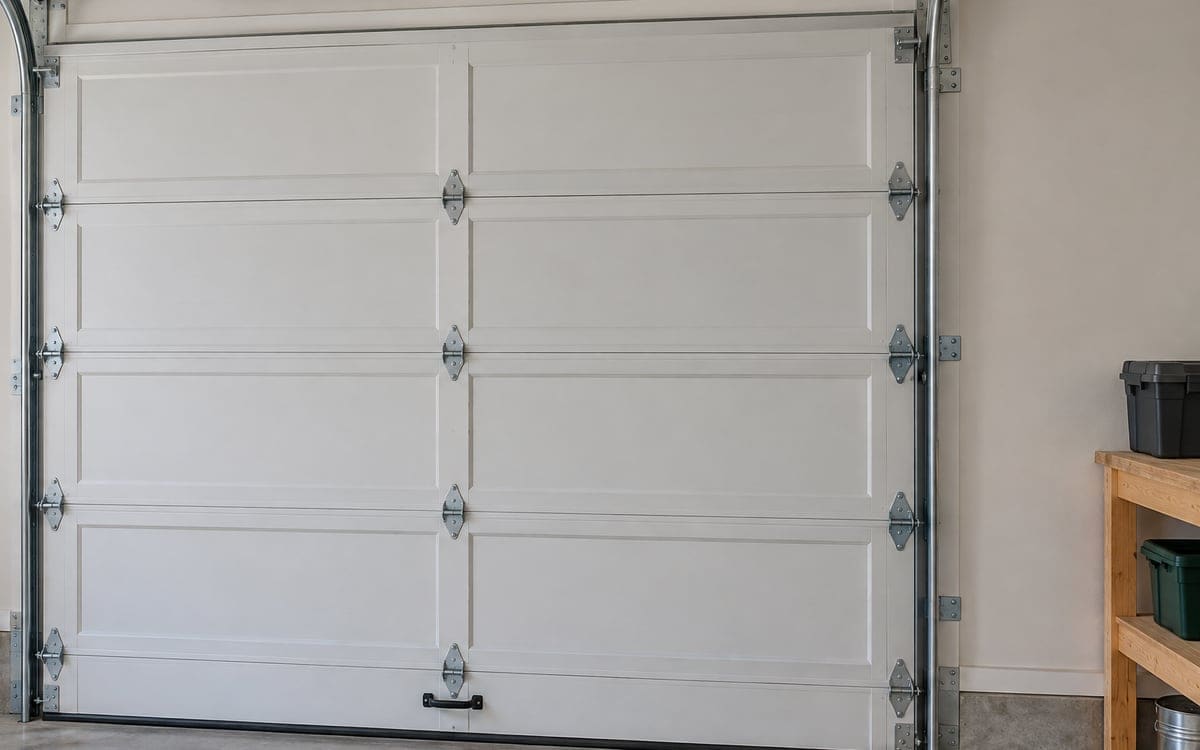
The first job on a noise call is listening. Our technician cycles the door once with the opener's breaker ready to cut, and the sound that triggered the call usually plays back on the first lift. From there the checks follow the parts the sound points at.
1. One run of the door, from the floor
A roller noise travels up the track with the wheel as it climbs. A spring noise sits above the door and only speaks under load, so it comes on the lift and goes quiet when the door is open and still. An opener noise comes from the motor head and runs down the rail.
2. A squeal that follows a roller
If the squeal moves up with each roller as the door opens, worn rollers are the usual answer. Both nylon and steel wheels sit on steel stems with bearings that dry out and rust over time. Nylon wheels also wear flat on the running face or crack across the hub. We check each hinge where the wheel sits.
3. Grinding that stays in one place
A grind that lands at the same height every run points at a flat spot on one wheel, a bent hinge, or a nick in the track at that height. We mark the spot with a piece of tape and start there, then run the door again to confirm.
4. Pops and bangs
A single bang from the garage usually means a spring let go. A pop that lands every few openings is more often a stiffened joint between two sections, or a hinge pin that has lost its grease. The hard one, a spring that popped, ends the morning for the door.
5. Rattles on the way up
A rattle traces back to track bolts worked loose, flag brackets that moved, or hardware never fully tightened at install. A rattle that started on a windy week often has an easy fix.
6. A hum from the opener
An opener that hums while the door sits is usually a broken spring, leaving the opener trying to lift the full weight of the door. We check the hardware before the opener gets the blame. A grinding or chewing sound from the motor head, by contrast, often points at a worn drive gear, and the fix is on the opener side.
7. A scrape along the track
A scrape says the door is riding where it should not. A roller is flat, a hinge is bent, or a track section is kinked. We sight down each vertical track and watch where each roller sits as it passes.
8. Creaks from an older wood door
Older wood sectional doors creak at the joints when hinges work against boards that have swelled or dried. The hinges often need new screws, longer than the stripped-out originals.
| Symptom | Likely cause | What it usually needs |
|---|---|---|
| Squeal that moves with the door | Worn or dry rollers | A full set of nylon or sealed-bearing wheels |
| Grind at the same height every run | A flat on one wheel, or a dent in the track | A roller replacement, or track work at that spot |
| Single bang, door barely rises | A broken torsion or extension spring | Both springs replaced in a pair |
| Pop between sections | A dry hinge pin or a stiffened joint | New hinges and screws, spring lubricant on the pins |
| Rattle at every lift | Loose track bolts or jamb hardware | Fasteners tightened, flag brackets reset |
| Hum from the opener, door still | A broken spring leaving the opener to lift the full weight | Spring work, not opener work |
| Scrape in one spot | Flat roller or bent track | Roller, hinge or track repair |
When we quiet the door and when we suggest a new one
When new parts quiet the door
If the door still runs straight, the sections are sound, and the noise comes down to one or two parts, parts work is the answer. Fresh rollers, new hinges, a tightened track and a cleaned opener gear cover most noise calls. A tune up folds those checks into one visit when the noise is spread across several places at once.
When a new door makes more sense
Door sections cracked at the end stiles, hinges pulling out of swelled boards, a track rusted through at the floor and roller stems bent across the opening are a different conversation. When parts keep failing one after another across the door, a replacement costs less than another round of noise chasing.
On a noise call, the price for each repair gets written down with you at the opening, before any work starts.
What a technician brings on a noise call
On most noise visits, the van carries a full roller set in nylon and steel, standard hinges with longer screws for stripped jamb holes, a non-greasy spring lubricant, track bolts and flag brackets. Replacement remotes and spare opener gear kits sit in the same tray for the grinding noises that trace back to the motor head. Not every job clears on the first visit: a model-specific section or an uncommon opener board may need an order.