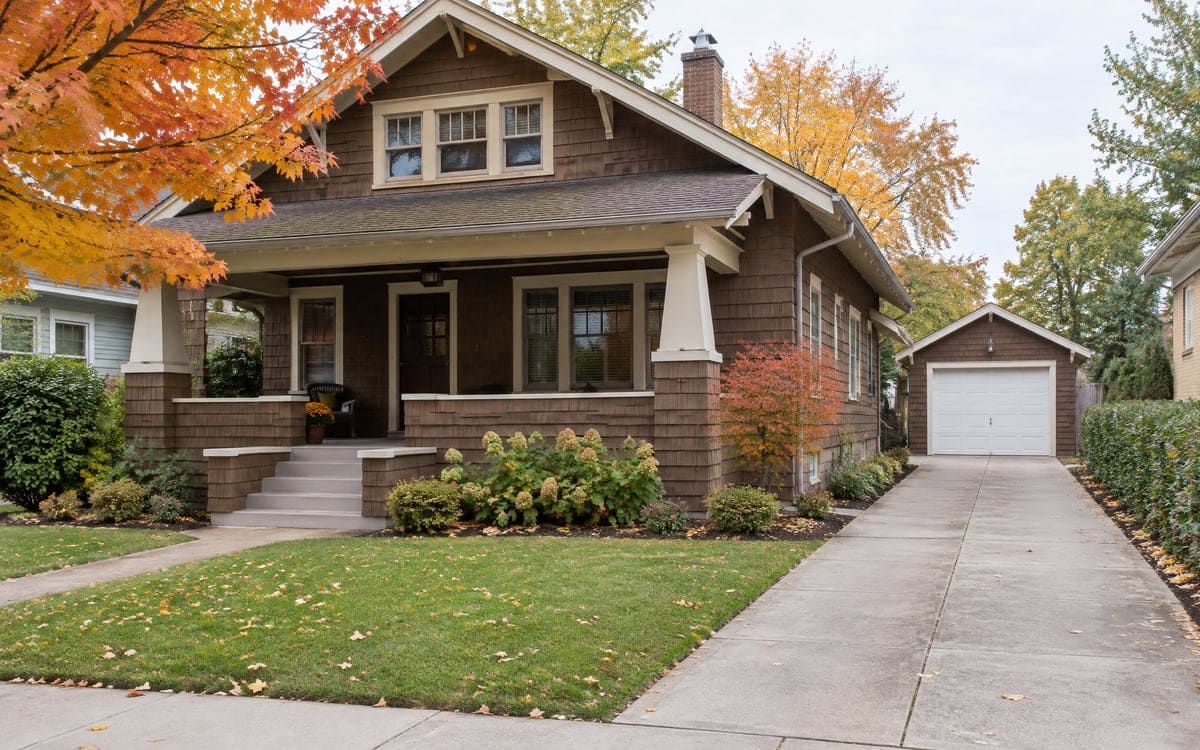
The middle Barrington house dates from 1971
For the typical Barrington garage, the age of the house around it matters more than the age of the door on it. The median year built for housing in Barrington village is 1971, give or take three years. A house from the early 1970s is sitting on an original garage structure that has usually seen one or two doors by now, and often an opener on its second or third generation.
The 1960s and 1970s built close to half the housing
The core of the housing came in during the 1960s and 1970s. Of the village's 4,424 housing units, 1,072 (about 24 percent) were built in the 1960s and 887 (about 20 percent) in the 1970s, together about 44 percent. Doors and openers rarely last the life of the house, so a garage of this age usually has a replacement door up now and an opener that has been swapped at least once.
About one house in eight is from 1939 or earlier
An estimated 575 of the village's 4,424 housing units, about 13 percent, were built in 1939 or earlier (margin of error plus or minus 157). Garages built in that era tend to be smaller than today's, often detached, often behind the house, and originally fitted with side-hinged pairs rather than overhead sectional doors. Barrington's Historic District is on the National Register of Historic Places and is one of the largest frame-home districts in Illinois.
Barrington grew along the railway from the 1830s
The village was incorporated in 1865, settled in the 1830s and platted along the Chicago & North Western Railway. On many older lots, a one-car carriage house along a back drive later got converted into a detached garage. On other lots a newer detached garage was built on the back of the property and the old one came down. The date on the deed does not always match the age of the garage.
Pre-war garages were built for other cars
Garages built before the second World War were built for cars that have long since left Barrington's driveways. The openings run narrower and the ceilings run lower than what a modern SUV wants. The original doors were often wood side-hinged pairs, swapped later for a sectional overhead door on a retrofit set of track. The structure's own measurements decide what fits now, so a door swap on a pre-war garage usually starts with a fresh measure rather than a brand or a color choice.
A 1960s or 1970s house is on its second or third door
Steel sectional doors took over new construction in the postwar decades, and the first wave on houses from the 1960s and 1970s is now well past replacement age. On these houses, the door up now is often the second or the third one. The hardware behind the door is often partly original: the vertical tracks may be the ones first installed, the jamb brackets can go back decades, and the opener's rail is sometimes still the one hung by the original installer. For a door at the end of its own run, replacing the whole door is often the better next question than another repair.
Springs and openers do not live as long as the house
A steel garage door of good spec can go a long run on a Barrington garage without a replacement. The springs underneath cannot. Springs are rated in cycles, where one cycle is one open and one close, and a door that runs several times a day works through those cycles faster than owners realize. Openers run on gears and sensors that wear through on their own schedule. For replacing tired springs, replacement is the path. For a newer opener with safety sensors, the swap often ends with features the old unit never had, including the photo eyes at the floor that are standard on newer units but missing on some older ones.
Old jambs, headers and floors change a repair
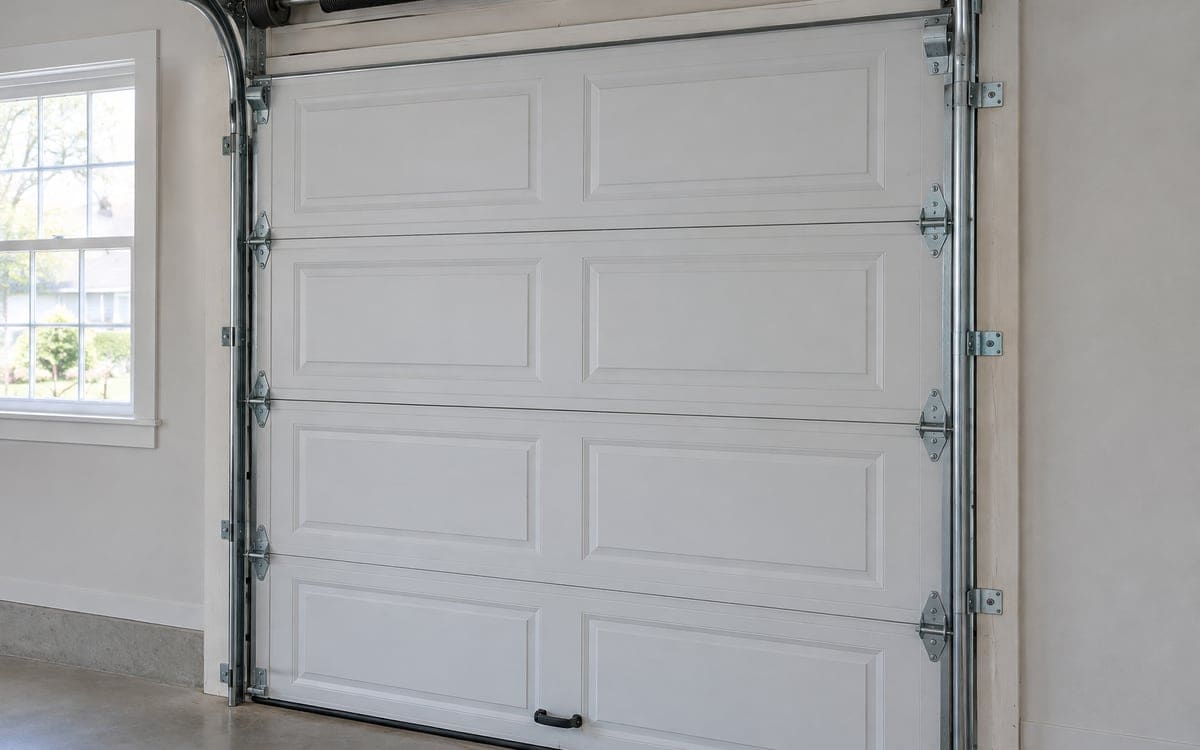
Garage structures from before 1980 bring their own repair wrinkles. The jambs the tracks bolt to are often painted wood that has taken on moisture over the years. The headers above the opening can be undersized by today's standards. The floor may slope one way or dip in the middle, which changes how a new bottom seal lies. On a track repair on an old painted jamb, the technician looks at the jamb before the track itself, because loose brackets usually mean the wood has gone soft rather than that the bracket is wrong. On a new door heavier than the one coming down, a reinforced header is sometimes part of the quote.
Newer homes are a smaller share here
About 14 percent of the village's housing units (624) were built in 2000 or later, including an estimated 72 built in 2020 or later. A newer house usually has an insulated two-car door and a modern opener on it. The parts under those doors have been built around today's cars and today's openers, so the questions move from "which generation" to everyday door care. About 67 percent of Barrington's housing units (2,966 of 4,424) were built before 1980, so the newer share is a minority view of what the typical garage looks like here.
Housing eras and the garage work that comes with them
About 68 percent of the village's housing (3,008 of 4,424) is single-family detached, with another 9 percent (411) single-family attached, so most of these garages belong to one household.
| Era built | Share of Barrington housing | What the garage and door often look like now | Service that usually follows |
|---|---|---|---|
| 1939 or earlier | About 13 percent (575 units) | Older garage, often detached, originally with side-hinged pairs, usually retrofitted long ago to a sectional overhead door on added track | Track and jamb work, bottom seal replacement |
| 1960s | About 24 percent (1,072 units) | Attached garage, steel sectional door that has usually been replaced at least once | Spring and opener replacement |
| 1970s | About 20 percent (887 units) | Attached garage, often a two-car door, steel sections | Spring and roller replacement, opener upgrade |
| 1960s and 1970s together | About 44 percent | The core Barrington garage, often on its second or third door | Door, opener and spring work combined |
| Before 1980 overall | About 67 percent (2,966 units) | Any of the above, usually on older framing and jambs that call for a careful look | Tune-up and track work alongside door work |
| 2000 or later | About 14 percent (624 units, including 72 since 2020) | Insulated two-car steel door, modern opener with safety sensors | Everyday door care, sensor alignment |
What to look at first on a door that came with the house
If you bought a Barrington house with the garage door already in place, a short walk-around is worth it before any first problem shows up. The bottom corners tell you the most, since rust at the bottom bracket, a frayed cable or a torn bottom seal show up there first. The look of the sections tells you the generation; a flat skin was common on older doors, a raised panel suggests the 1990s or later, and applied trim is a more recent make. An opener older than today's basic unit often has no photo-eye sensors at the floor and runs loudly through each cycle. The balance check, the force setting, the spring tension and the hardware under load belong to a technician on a visit, with the breaker off at the panel.
For a design overlay on top of the age question, the historic district garage door guide covers what the Village looks at. When the decision moves from a single part to the whole door, the repair or replace guide walks through counting the failures over time. And the Barrington area page sets the housing stock in context.