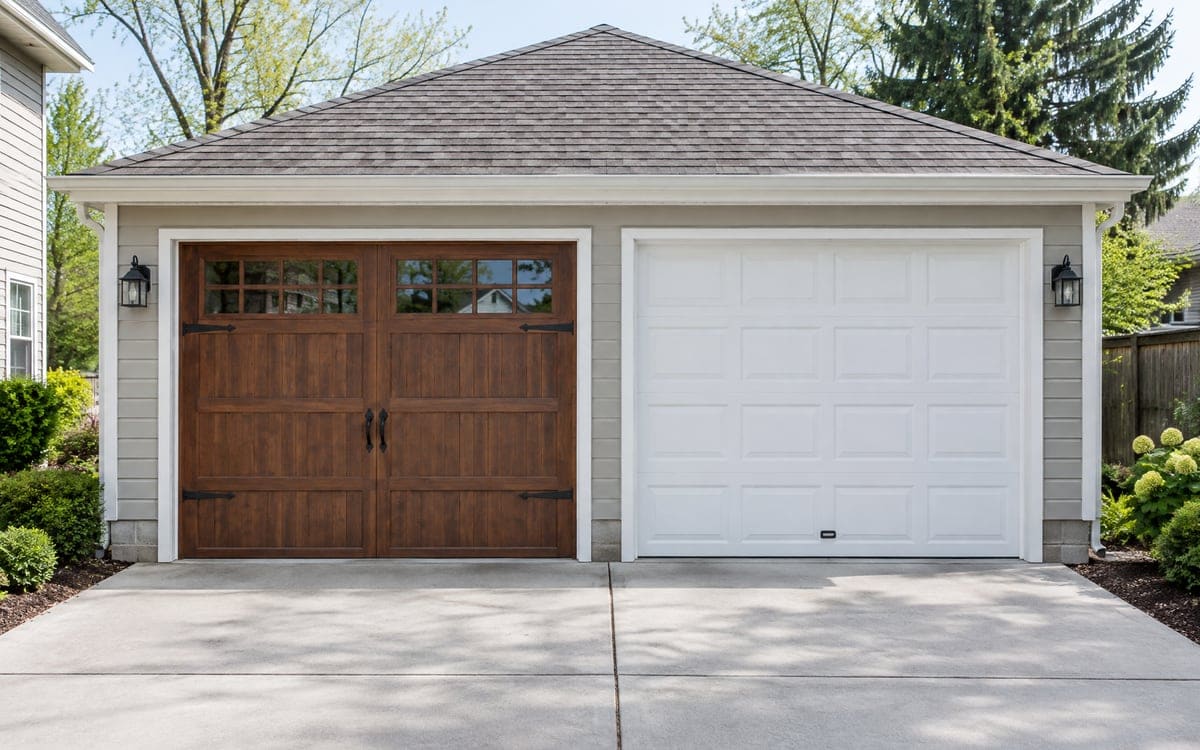
A fair price starts with a look at the door
A full diagnosis at the house is the first step on every repair. The technician works through the full system (springs, cables, drums, rollers, hinges, track, sections, seals, opener and sensors) and confirms which part needs work and which parts are only tired.
Two doors the same width and the same shape on the outside can still produce different repair prices. The springs may be sized differently, the opener may be older than it looks, the jamb may be split behind the trim. Both are easy to miss over the phone and only turn up on the visit.
The part, and which grade of it
Each part on a garage door comes in grades. Rollers come in plain steel, sealed steel and nylon with sealed bearings. Springs come in standard and high cycle. Openers come as chain, belt and jackshaft. Within each type there are weight ratings. The price on a repair reflects the grade chosen, as well as the task.
A high-cycle spring costs more than a standard one and lasts much longer on a door that opens six or eight times a day. A set of sealed nylon rollers costs more than plain steel and almost never asks to be oiled. The right grade depends on how often the door runs and what the garage is used for.
Size, weight and material change the job
A 16-foot double door weighs a different amount than an 8-foot single, and the springs, cables and drums step up to match. A heavier door means a thicker spring wire, a larger drum, longer cables and more hardware across the opening. Each piece is small on its own; the total covers them all.
The door's material matters too. A single-skin steel door is light; an insulated steel door is heavier; a wood or wood-overlay door is heavier again. The hardware for each is different, and so is the time it takes to balance the door after the repair.
A heavy wood or overlay door is its own case
Wood and wood-overlay doors turn up on older houses and on newer ones built for the look. The median year built for housing in Barrington is 1971,1 and about 13 percent of the village's housing units were built in 1939 or earlier.2 A wood door is heavier than steel, swells and shrinks with the seasons, and sometimes has had a coat of paint added that moved its weight again.
A spring job on a wood door takes different springs, a careful balance check after installation, and sometimes a drum change. A dented section repair can turn into a split-board repair that no steel-door technician would face. Spring replacement on a wood door is more work than on a bare steel door, and the quote will show that.
Springs are priced as a pair for a reason
If one spring has failed on a two-spring door, the second is close behind. The springs went up and down the same number of times, in the same cold mornings, on the same door. Replacing only the broken one tends to invite a repeat call for the matching spring, usually at a worse time.
A pair of springs is replaced together on a two-spring door, since the second spring has been through the same cycles as the broken one. Over the life of the door, that keeps the balance even and avoids a return trip for the matching spring.
Older openings can add work no one saw coming
Behind the trim of an older garage, the wood that holds the track and the jamb brackets may be soft, split or short on fastener bite. A technician who finds a jamb that cannot hold a lag screw cannot simply tighten the bracket; the wood needs reinforcement or a new backer board. That is a small carpentry job added to the garage door repair.
On an older concrete slab, the floor can be out of level by half an inch across the opening. A bottom seal that was fine on the old door may show daylight on a new one, and a shim or a thicker seal gets added. A phone estimate cannot see any of this through the trim.
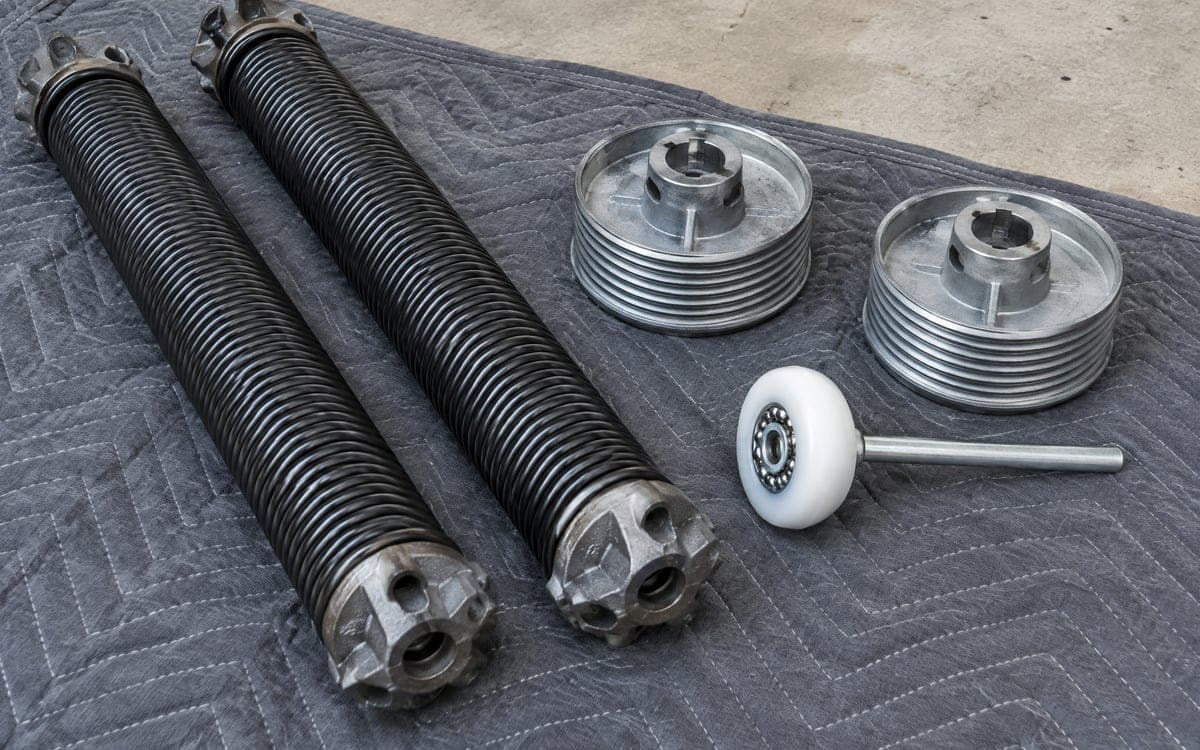
The same goes for the cable drums at the top of the door. A drum that has worn a groove into itself over a long run tends to be replaced along with the cables, because new cables bite into an old groove and fray faster than they should. A planned spring job that uncovers worn drums adds a small item to the quote rather than being left for a second visit.
An urgent visit
The parts going in on an urgent call are the same parts as on a planned visit, with the same ratings.
What may change is how deeply the inspection reaches: a door hanging crooked gets secured and read first, with a plan for the full tune up on a follow-up visit.
What a good quote should list
A quote worth signing sets out, in words, what is being repaired, what parts are going in, which grade of each (spring cycle count, roller type, opener drive), the labor to install them, the company's name and address, a date, and anything else that might be found during the work.
Lines a quote should not have include "miscellaneous" with no items under it, "we can do more if we find more" with no cap or callback step, or a parts list with no grade spelled out. Ask what each line is for and what happens if a hidden fault turns up during the work.
A contractor on a Village permit has to register with Barrington
If a repair needs a Village permit, Barrington's rule is that all contractors and subcontractors associated with a permit must be registered with the Village, and the permit is not issued until every contractor has registered.3 The Village has not published a rule saying whether a garage door repair itself needs a permit, so the permit question goes to the Village's Development Services Department, which decides for the job at hand. More on who to ask about permits covers the detail.
A quote on a job where a permit is involved should mention the permit and name the contractor's current Village registration. If the quote is silent on the permit question, ask Development Services about the job and ask the company how its paperwork would read.
Lines on a quote worth asking about
| What the line says | What it usually covers | A good question to ask |
|---|---|---|
| Labor | The technician's time at the house, including the inspection and the install | Is it priced by the job or by the time, and what is in the number? |
| Spring replacement, standard | A pair of standard-cycle torsion springs | What cycle rating is standard, and what does high cycle cost? |
| Roller set | A set of rollers across the door | Plain steel, sealed steel, or nylon with sealed bearings? |
| Opener repair | Labor to swap a drive gear, logic board or sensor | Is a new remote or keypad included if ours stopped pairing? |
| Panel replacement | One or more sections, matched to the door | How long to confirm the match, and what if the model is gone? |
| Materials | Hardware, fasteners, lubricants | Fixed amount or estimated? |
A quote with every line explained is the paperwork you want in hand before deciding between opener repair, a full fix now with a new opener later or pricing a new door.
Choosing between contractors on their quotes is its own step; the guide on checking the company behind the quote walks through what to look at.