Anything in the beam reverses the door
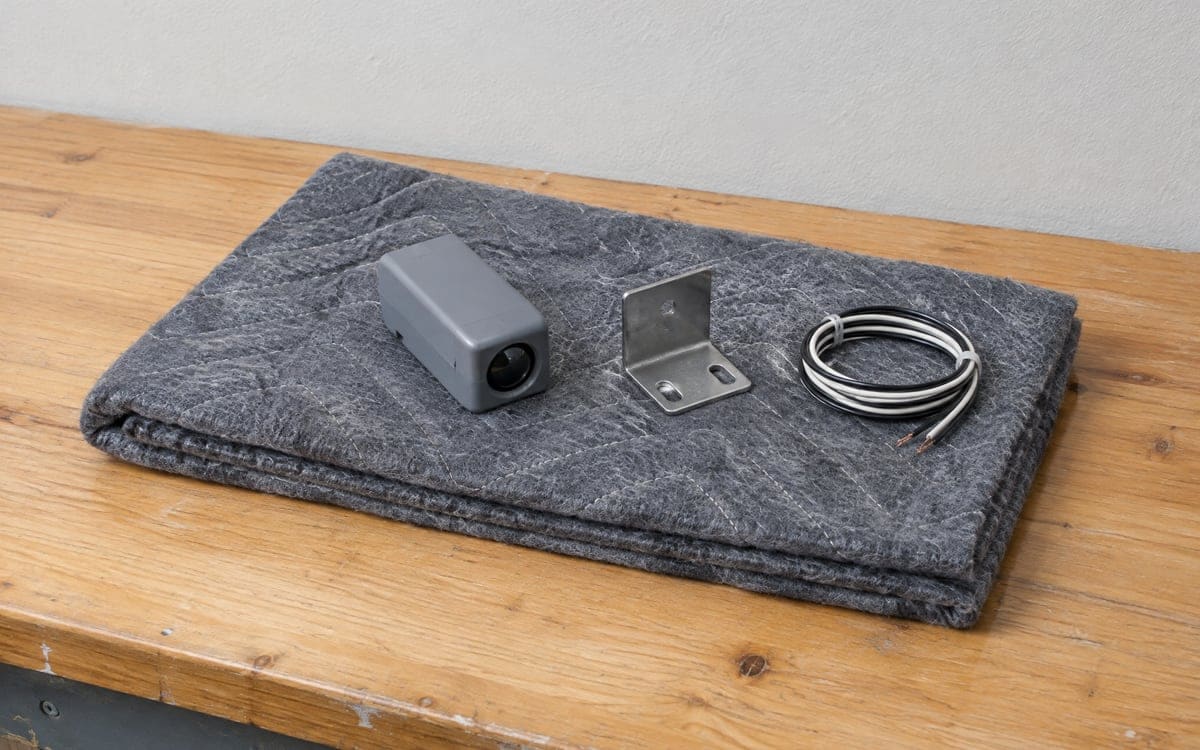
The two sensors near the floor send an infrared beam across the opening. If that beam is broken while the door is closing, the opener reads the break as an obstruction and runs the door back up. The sensors do not know the difference between a child's foot, a dog, a bag of mulch, a drift of wet leaves and a lump of shoveled snow. All of them read as the same thing from the opener's point of view, so fall and winter are the seasons when the beam is most often blocked.
The light pattern on the sensor housings gives the first clue. One side is the sender; the other is the receiver. Most openers put a steady light on the sender and a steady light on the receiver when the beam is lined up and clear. If one of them is blinking, going dark or flickering, the opener is telling you where the trouble is before you take anything apart. The diagnosis depends on which eye is talking, and our sensor repair page covers the common patterns.
Leaves and drifted snow sit right at sensor height in a Barrington autumn
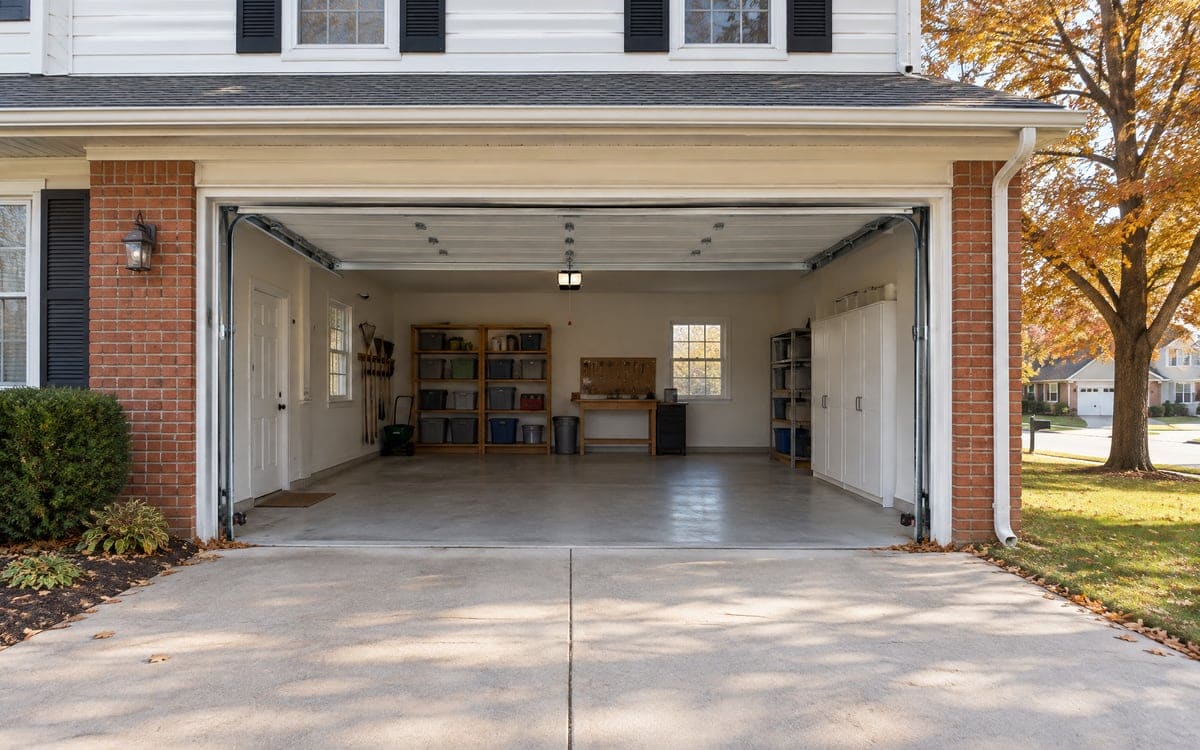
The sensors sit about six inches above the floor by design, one on each side of the opening and facing each other. That keeps them below where a car bumper would hit but above where normal dust and water would reach. In a Barrington autumn, six inches is also where fall leaves pile up when the wind catches them against the garage. One leaf stuck to the lens blocks the beam the same way a hand would, and the door will not close. In winter, the first stretch of blowing snow does the same thing to a sensor on the windward side.
The problem gets worse during Barrington's long cold season. The normal first measurable snowfall at O'Hare comes on November 18 and the normal last on April 2.1 That is a long stretch when drifted snow near the door is a daily possibility, often paired with wet leaves still around from the fall.
A visual check from a safe distance tells you if something is sitting against the lens. If you can see a leaf or a crust of snow on either sensor, that is almost always the whole story. Leave the lens itself to the technician on the visit; the door's path is no place to reach into while the opener still has power.
Shoveled snow piled beside the door blocks the eyes
The second place snow finds the beam is where the shoveling ends up. Public Works does not clear snow plowed onto driveways in Barrington,2 so each homeowner shovels or blows what the plow left. The pile builds along the edge of the driveway, close to the garage, and often leans against the opening.
A pile three feet tall against the right-hand jamb will cover the right-hand sensor completely, so from inside the garage you can see the eye looking at a wall of snow. The opener will not close the door, the receiver light stays out, and clearing the pile puts the sensor back in service without any sensor work.
A snow blower throwing wet snow toward the house does the same thing in a milder form, caking the lens with slush that freezes overnight into a solid plug. When a sensor stops working the morning after a storm and nothing was bumped the day before, slush over the lens is a common cause.
Bumped brackets after snow clearing
Shoveling and blowing snow near the door is where sensor brackets take their hits. The brackets hold the sensors at a known height on each side of the track, and the beam is aimed at the opposite eye along a straight line. Clip the bracket with a snow shovel, catch it with the auger of a blower, or hook it with the lead edge of a snow pile sliding off the car, and the beam goes off line without anything being wrong with the eyes themselves.
A bumped bracket shows up as a sensor that was working yesterday and is not working today, usually with one steady light and one blinking light. Realigning sensors is a technician job on an older opener, because the brackets, the wiring and the opener board all have to agree, and setting the alignment once beats a door that reverses again a week later.
Garage door sensor blinking green on an older unit
Different opener boards use different colors for sender and receiver, and newer units often use green on one eye and red on the other. If one eye is blinking green on an older opener, a steady light on the sending eye means the sender has power, and a blinking or dark light on the receiving eye usually means the beam is not reaching it, from dirt on the lens, a leaf or snow in the way, or a bumped bracket. Colors vary by opener; the pattern matters more than the color.
A blinking light on both eyes points at power on the opener side, often a wire that pulled free during drywall or shelving work in the garage. The opener board, not the sensor, is where that gets traced.
A field table for garage door sensor problems
| What you see | Likely cause | What it usually needs |
|---|---|---|
| Door starts down and goes right back up | Anything in the beam | Clearing leaves, snow or an object from the opening |
| One eye steady, one blinking | Alignment off, bumped bracket | Realignment, bracket check, wire check |
| Both eyes dark | Power lost to the sensor circuit | Wiring trace back to the opener, loose terminal fix |
| Remote and keypad do nothing, wall button works | Opener lock mode is on | Lock switch toggled off at the wall button |
| Door fails in early morning or late afternoon | Low sun shining into the receiving eye | Receiver side shaded or shifted at the visit |
| Door reversed after shoveling | Pile against the sensor on one side | Pile cleared, bracket checked for a bump |
When the beam is clear and the door still will not close
If every lens is clean, both lights read steady, and the brackets look straight, the trouble is usually not the sensor at all. A down limit set too far, a close-force setting too sensitive, or the opener logic board itself can send the door back up at the floor. Those are all technician adjustments at the opener. Our page on a garage door that will not open or close walks through what else to look at when the sensor is in the clear, and the opener repair page covers the opener side.
A sensor fault that keeps coming back is worth catching early. A visual check at the whole door, including the sensors, is what our seasonal safety check is built around.
What to check from a safe distance
Walk around to the outside of the door and look at the sensors on each side with the door open. Then step inside the garage, from the house door, and look at the lights on each sensor. Do not reach past the door tracks and do not step between the eyes while the opener is powered. If you see a leaf or a crust of snow stuck to a lens, note which side; if the brackets are visibly bent or hanging, note that too.
If the door is sitting partway down and will not finish, do not try to force it closed. Leave the opener alone and keep anyone away from the opening until a technician is at the door. The reversing is the safety feature working the way it was built to, and the job is finding what triggered it, which happens on the visit.