Is the door past saving?
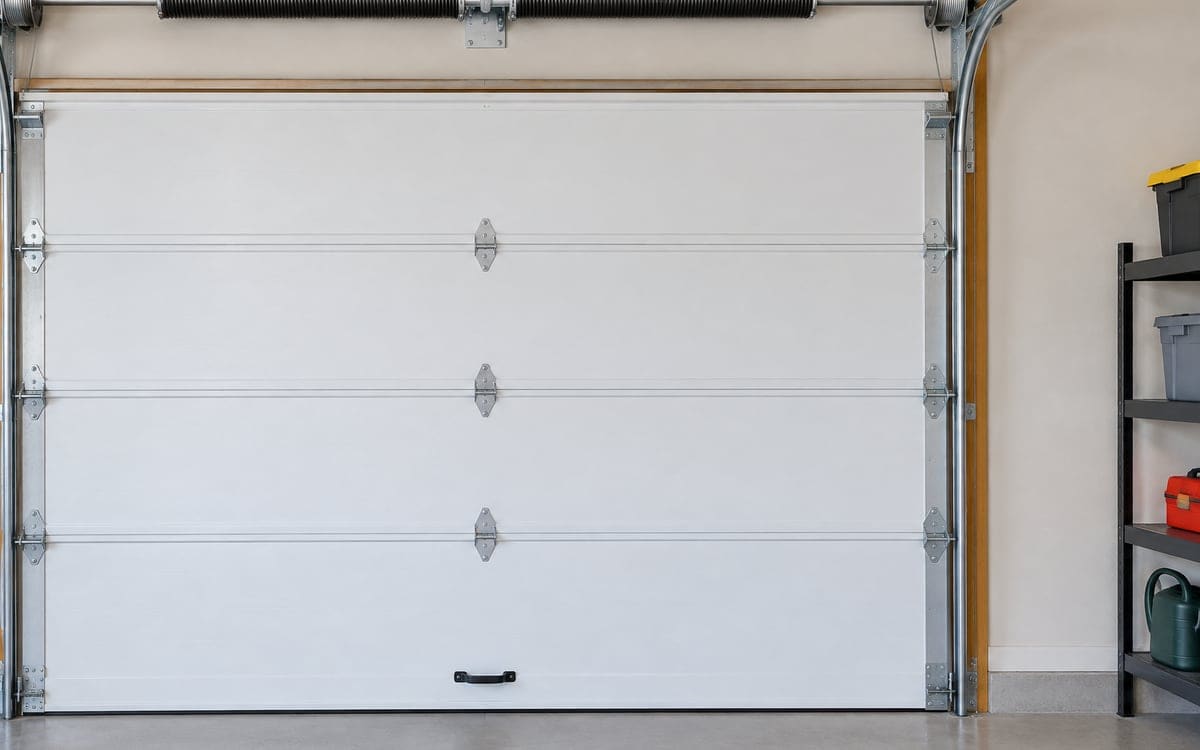
The call is usually not clean. A door that would be worth repairing on paper may still be worth replacing in the real garage, because of what else is going on behind the sections. On the visit we work through the whole door, section by section and hardware by hardware, and tell you what we see.
The sections
A door with one cracked section is a panel question. A door with cracks across two or three sections, sun-faded paint, or sections that have warped at the top edge is a replacement question. Wood doors with soft lower boards or splits that run through to the back face are usually done.
Springs failing again and again
Torsion springs are rated for a set number of open-and-close cycles. A spring that broke once, got replaced two years ago, and has broken again, is a door that is heavier than the springs it is being fitted with (or a sign of the wrong replacement part). Replacing the door lets us size new springs to the finished weight. See replacing one section instead when the problem really is only a section.
Tracks that will not hold alignment
Vertical tracks bolted to tired jambs lose their line. Horizontal tracks sag at the hangers. A door that keeps going slightly off track in the same place every time is telling you the hardware around it is done.
Rotted jambs or a soft header
Water finds the bottom of a wood jamb. The sections of the door are fine, but the jamb they live in has turned soft, and the track bolts no longer have anything to grip. Jamb work is part of the replacement scope on an older house.
A door that will not hold balance
The door should sit still at any point in its travel. A door that will not hold balance even after spring service often means the weight of the door itself has changed, water-logged wood sections or added hardware, or that the current hardware no longer suits what the door has become. A new door with springs sized to it starts clean.
| Signs the door is done | What usually gets replaced with it |
|---|---|
| Sections cracked through more than one | Full door, tracks, hinges, rollers |
| Rotted wood along the bottom board | Full door, bottom seal, possibly the jamb |
| Discontinued parts, hunt for section matches | Full door; a close color match is still a visible one |
| Springs failing again and again | Full door with correctly sized springs |
| A door that will not hold balance after service | Full door, cables, drums |
What the replacement scope covers
Replacement is not a section swap. Our technicians plan the job around the opening and the finished door's weight.
- Measuring the opening, jambs and header. The clear opening width and height, side room, backroom and headroom all go on the sheet, and we check the jambs and header for rot or soft spots before anything is ordered.
- Releasing spring tension safely. The old torsion springs are unwound by the technician. The homeowner stays clear of the door while this is happening.
- Tear-out of the old door. The old door is taken down section by section and the old tracks come off the jambs. What happens to the old door and the old tracks is settled at the quote.
- New tracks, springs and cables, sized to the new door. New vertical and horizontal tracks mount to the jambs and the ceiling, new torsion springs sized to the finished door's weight go on the shaft, and new cables run from the bottom brackets to the drums.
- Weather seals and the bottom seal. New side and top weather seals keep air and water out of the edges, and a new bottom seal replaces the old astragal; see seals that come with the job for how the bottom seal fits.
- Reconnecting or replacing the opener. If the opener is being kept, the trolley reconnects to the new door, and the force and travel settings reset to the new weight. If the opener is at the end of its life, a new opener if the old one is worn usually goes in at the same time.
- Balance and reversal tests. The door balances by hand, the reversal test runs with you watching, the sensors are tested, and we walk through what to expect in the first week.
Keep the opener, or go with a new one
An opener that was fine on a lighter old door often will not carry over to a heavier new one, because the force headroom is not there. We check the opener's age and condition, the force profile on the new door, and the remote generation. Where the match is clean, we keep the opener. Where it is marginal, the quote names a new unit alongside the door so you can compare both choices in one place. Compare the options at choosing the new door and how to decide.
Rules from associations and the historic district
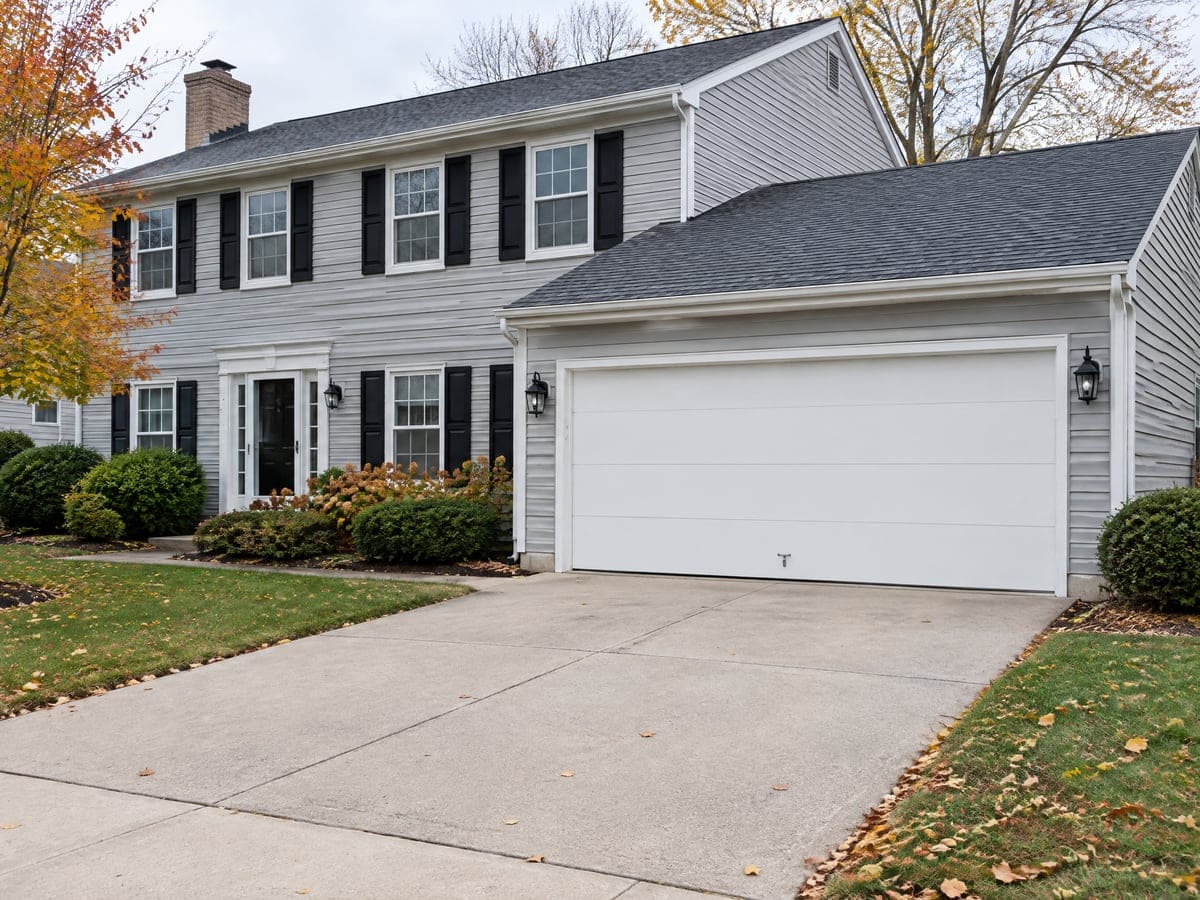
Associations run their own rules. On attached single-family homes with a homeowners' association, the paint color, panel style and window pattern on a garage door are often listed in the architectural guidelines. Where an association exists, the rules are worth reading before you order the door.
Village of Barrington's Historic Overlay District is a separate conversation. The Village says the district requires a Certificate of Appropriateness in addition to a building permit for any exterior modification to a structure or site in the district. The district itself is on the National Register of Historic Places, one of the largest frame-home districts in Illinois, with Folk, Craftsman, Victorian and other early American styles, and Queen Anne homes lining Lake Street. We can quote the replacement; Village staff answer before anything is ordered. Replacing a door in the historic district covers the guidelines in full.
What our technicians bring for a replacement
Our installers bring the pre-ordered sections, new tracks sized to the door, new torsion springs calculated for the finished door's weight, new cables, new drums, new rollers, new hinges, bottom seal, side and top seals, and the opener kit if one has been ordered. Jamb-repair stock rides too: pressure-treated 2x6 for a bottom replacement, long screws for a soft header, and shims for an out-of-square opening.
From your call to a new door working
The call sets the measurement visit. On the visit, our technician measures the opening, looks at the sections, springs, cables, hinges and tracks, and goes over door choices with you. The price covers the door, hardware and any opener work, and is agreed before anything is ordered; the install happens on a scheduled day. At the end you see the balance test, the reversal test and the sensor test done in front of you.
Older Barrington houses and whole-door replacement
The village is overwhelmingly single-family housing, with 3,008 of the 4,424 units in detached houses, about 68 percent, and another 411 in single-family attached. The housing stock skews older, which matters on a replacement for three reasons: the jambs are often wood that has absorbed water over decades, the opening is often out of square after years of settlement, and the color on the siding has drifted enough that a bright new door reads loud if the color is picked only from a chip in winter. With a median year built of 1971 and about 44 percent of the housing put up during the 1960s and 1970s, those are not corner cases on a Barrington replacement. See how doors on houses from those decades tend to wear, and what sets a replacement price for the pieces that move the number.