Older openings are rarely square
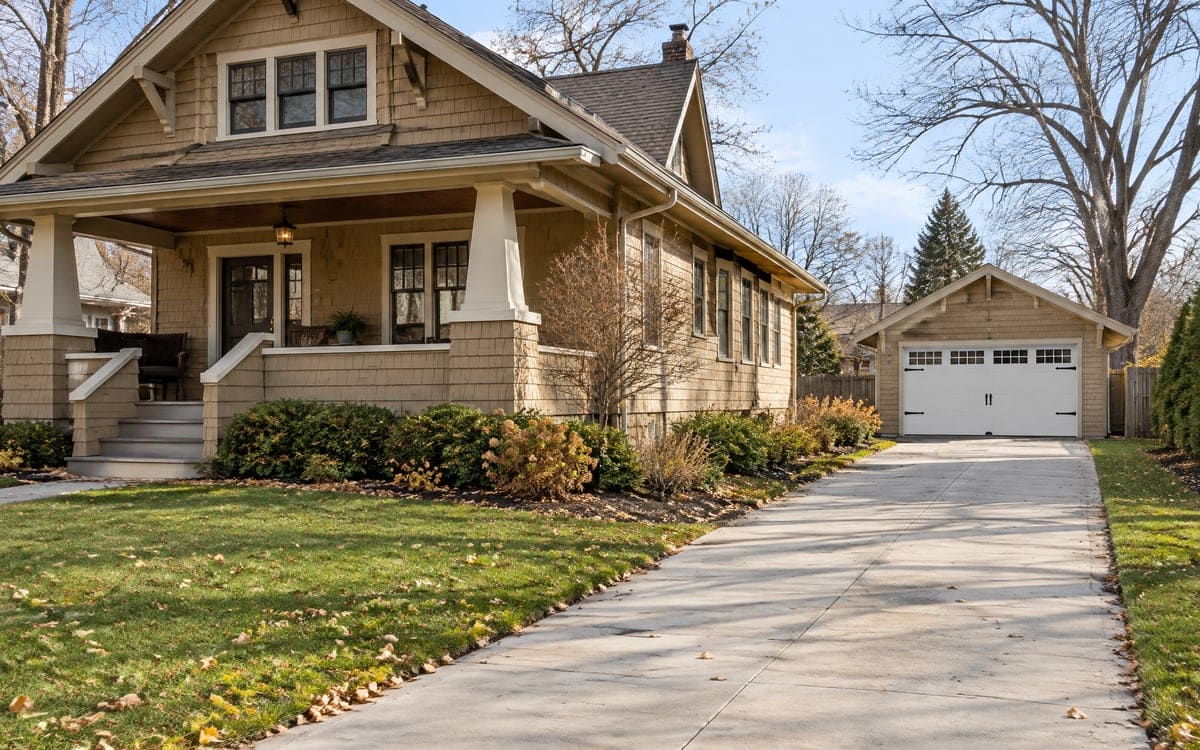
A rough opening in a wood-framed garage settles over the decades. The sill drops a hair at one corner while the header sags a touch in the middle and the side jambs lean. In Barrington, an estimated 575 of the village's 4,424 housing units, about 13 percent, were built in 1939 or earlier,1 and that is where stop molding has to pick up the slack the frame no longer holds true.
When a side jamb is out of plumb by a quarter inch over seven feet, a straight run of stop leaves a wedge of light somewhere. On a new build, the fix is to shim the jamb. On an old garage, the fix is often to scribe the stop and work from the door back. New vinyl stop on a twisted jamb will leak the way the old stop did.
Wood jambs take a different stop than steel frames
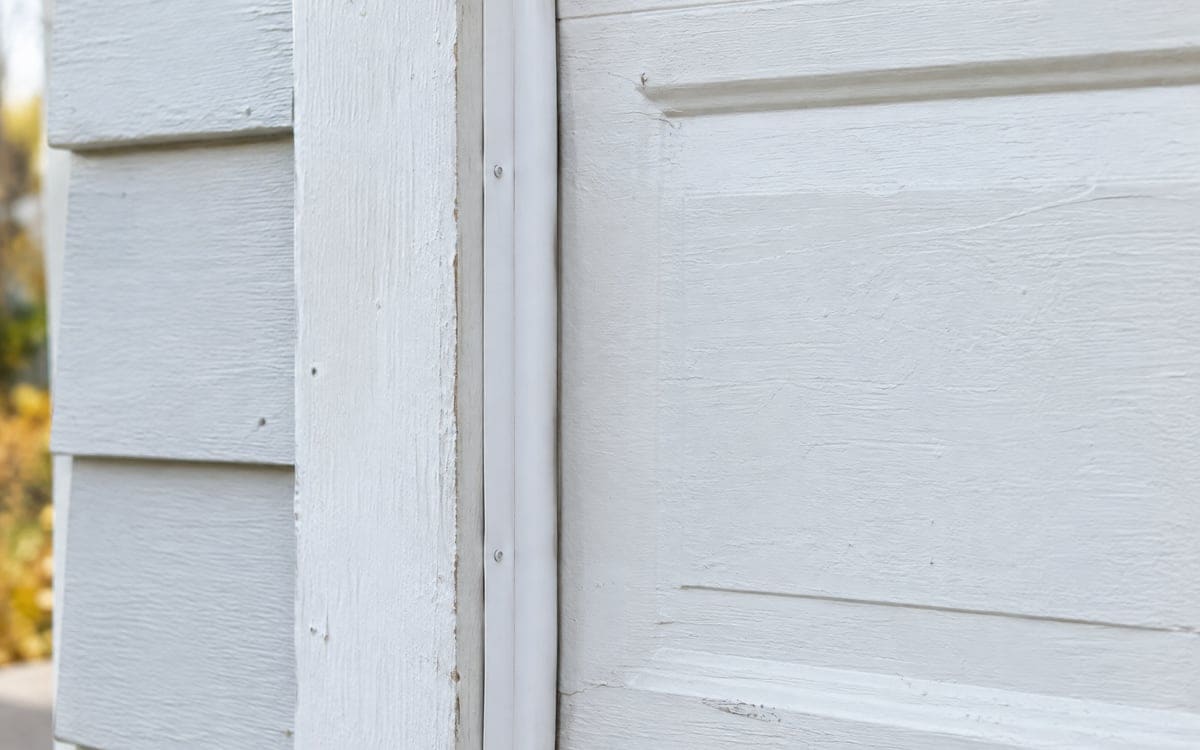
Newer garages often have jambs wrapped in PVC or metal trim over the wood framing, which gives a flat mounting surface for stop molding. Older wood-framed garages typically have a plain wood jamb, often a 2x6 or 2x8 that has been painted and re-painted since the Eisenhower years.
A wood jamb needs the fasteners to catch sound wood and skip filler or an old nail hole. The back of the stop has to sit flat against the jamb, so paint ridges and old caulk come off first. The seal lip has to touch the door face top to bottom without pinching, because a tight fit at the top and a slack fit at the bottom is how wind finds the gap. Vinyl stops with a flexible rubber lip are the common choice on wood. On a very weathered jamb, a two-piece aluminum stop with a replaceable insert sometimes spans the dips better than vinyl.
The bottom seal has to follow an uneven floor
Side stops only matter if the bottom is tight too. On an older detached garage the slab is rarely flat corner to corner, and a rigid bottom seal on a bowed floor leaves daylight at the low point. The usual fix is a bulb seal shaped to compress across the full width of the sweep, matched to a retainer that holds its curve. If the retainer is bent or the T-slot is worn out, that gets changed with the seal. For the full picture of weather seals around a door, our weather stripping and bottom seal page covers each piece.
You can see where the bottom lets light through by looking at the closed door from outside on a bright day, from a safe distance. Where daylight shows is where the sweep is not meeting the floor.
When the jamb itself needs repair first
Stop molding is a sealing part. The jamb behind it is the structure, and if that structure is rotted or split, no stop will hold a seal against it. Water that has run down behind an old aluminum stop for years will eat the bottom foot of a painted wood jamb from the back. The paint can still look fine on the garage side. From a few steps back, look at the base of each jamb for peeling or blistered paint, dark staining near the slab, and gaps where the trim meets the floor. Those are the signs the technician will probe at the visit.
A rotted jamb is handled before the new stop goes on, so the stop sets into sound wood. If the sill plate under the jamb has gone with it, that framing is its own job and gets addressed before the stop is reset.
A field table for what you are seeing
| What you see | Likely cause | What it usually needs |
|---|---|---|
| Daylight along one side, top to bottom | Jamb out of plumb, stop set straight | Scribed replacement stop, shim behind the jamb if needed |
| Daylight only at the top corners | Header sag, or stop not continuous into the corner | New side-and-top stop set as one unit, mitered corner |
| Peeling paint and dark staining at the base of the jamb | Rot behind old aluminum stop | Cut back to sound wood, splice jamb, then re-stop |
| Flapping or torn rubber lip | Vinyl aged and brittle, often on the sun side | New vinyl stop with fresh rubber lip |
| Light under the bottom at the center | Bowed slab or tired bottom seal | Bulb seal profile matched to the gap, retainer checked |
| Light at the bottom corners only | Slab high at center, lower at corners | Thicker bulb seal, sometimes a floor seal added |
Garage door trim is the same part by a different name
Trim and stop are often the same piece under different names. The stop is the part that touches the door and holds the seal; outside the garage, the same strip reads as trim at the edge of the opening. The piece under the siding, the brick mold or wood casing that frames the opening, is a different part, and taking it off is more a carpentry job than a door job.
Sealing in Barrington's long cold season
The normal first measurable snowfall at O'Hare comes on November 18 and the normal last on April 2.2 That is a long stretch for cold air to find any gap in the stop or the bottom seal. For an attached garage, the air it loses becomes air the house works harder to replace. For a detached garage, the issue is water: snow blown in through a top-corner gap melts on the slab and refreezes near the door, and an old bottom seal gets locked down and torn when the door is lifted.
Panel insulation is a separate decision from sealing the opening. If the inside of the garage matters to you year round, our take on door insulation on older Barrington garages covers what panel insulation does and does not do.
When stop molding is part of a bigger repair
On an older detached garage, a loose or torn stop often comes with soft spots at the bottom of the jamb and a door that has its own aging damage, a bent top section or a cracked bottom rail. The stop molding and the bottom seal work together as one weather seal around the door, and the panels close against both. A tune-up and safety visit is a good time to look at the whole system. The technician measures the opening at the top, middle and bottom, checks the panels for daylight after a cycle, and tells you which parts of the seal are doing the work and which have given up. For the longer view on what a 1920s or 1930s house tends to need, our notes on older Barrington homes walk through the common repairs by era.