Why the door looks crooked
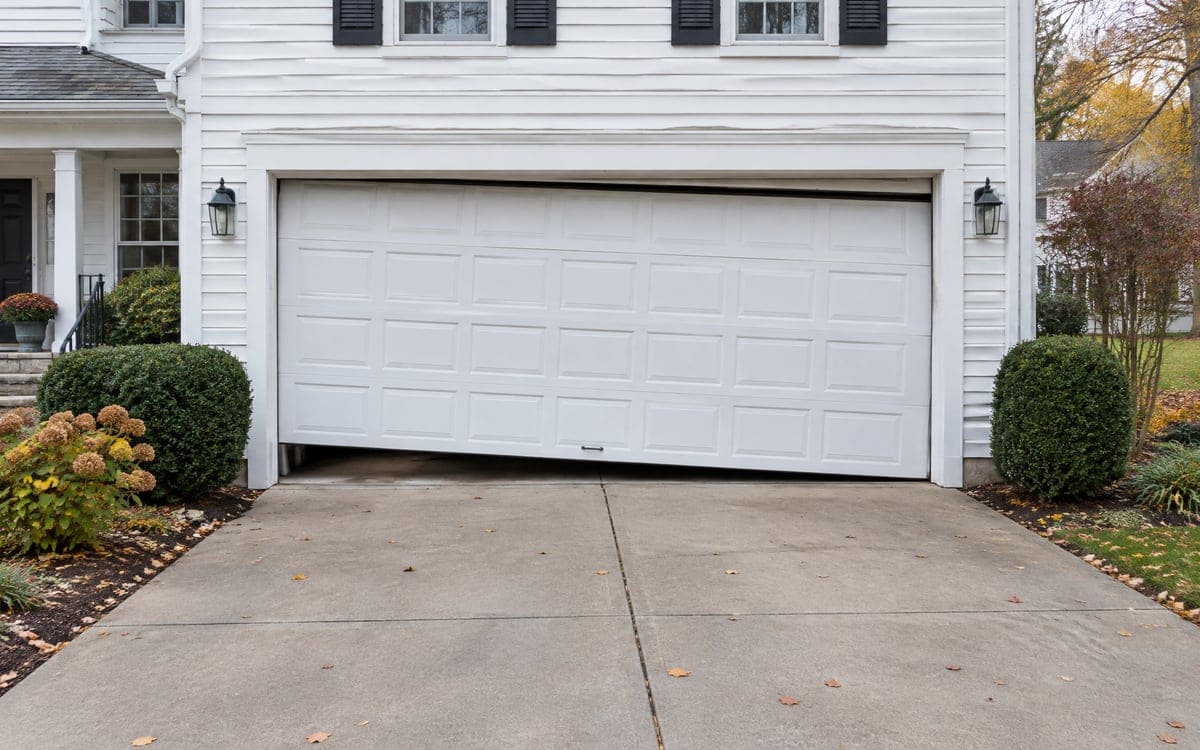
A cable fault almost always shows at the door before anyone can see the cable itself: one side lifts low, the door hangs an inch out of square, and a thin wire often pokes out of the plastic sleeve near the floor. A technician works that symptom back to the part in order.
1. The bottom corners with the door closed
With the door closed and the breaker off, a technician checks the bottom corner on each side. The lift cable loops around a stud on the bottom bracket, runs up the inside of the jamb and onto the drum at the top. A cable at full tension has no visible slack; one that has started to fail hangs loose or shows a bulge where strands have broken.
2. Fraying, rust and kinks along each cable
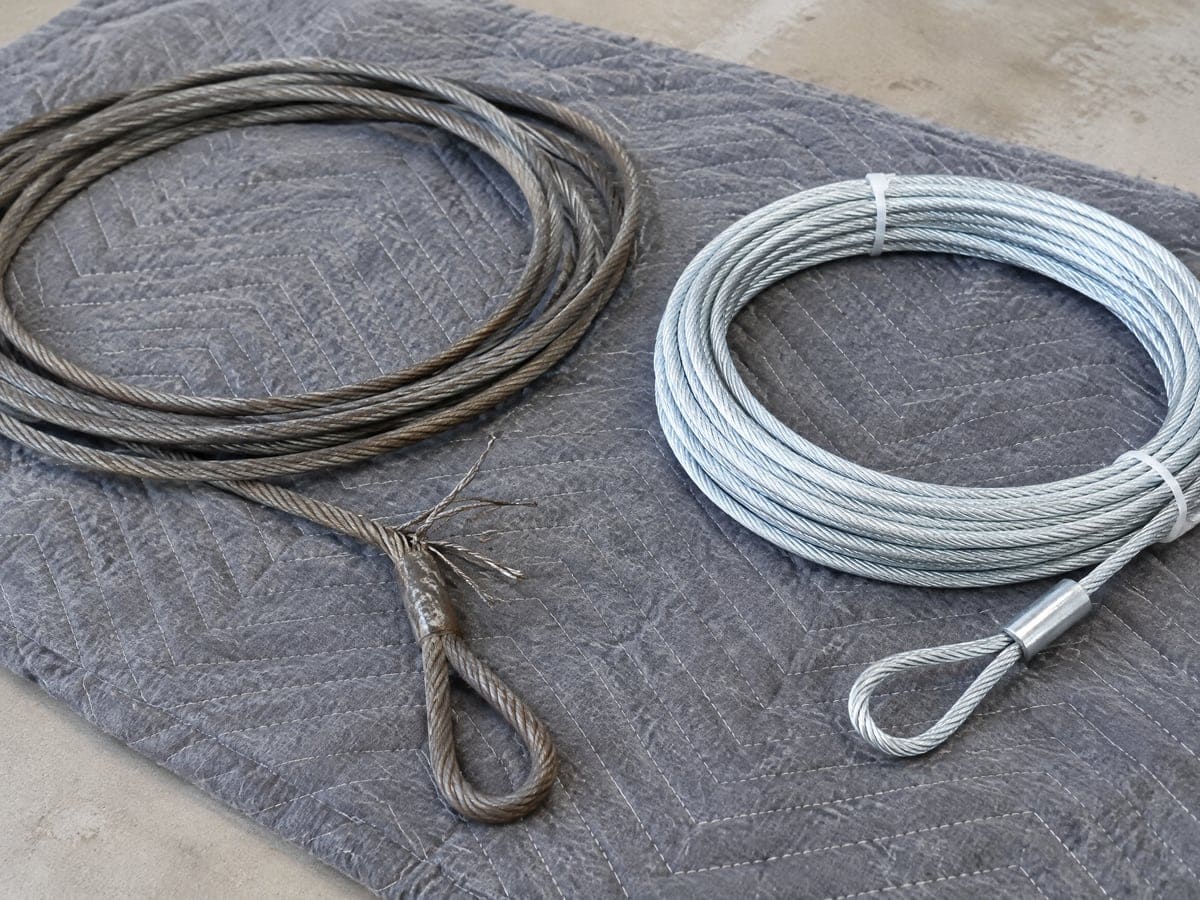
The length of the cable gets the next check. A kink means the drum let the cable off and the next cycle pinched it. Rust at the lower foot of the cable is the common finding on a garage with salted meltwater on the floor. A single broken strand is the warning; a cluster of them is a cable at the end of its life.
3. A slack cable, or one off its drum
A broken spring unwinds the drum, which puts the cable off its spool. A broken cable leaves that corner of the door without lift, so the door tilts and the other side takes the load. Either way, the cable has to go back on under supported load, not under the opener's pull. The technician works out which of the two has happened before anyone touches the shaft.
4. A door that rises one side first
If the household has been running the door with a tired cable, the lift goes crooked. One side rises first, the sections bend at the hinges, and the rollers start to leave their channel. A crooked door has to come to a full stop before the next check. The cable sometimes brings a bent track and a jumped roller with it, which turn a cable job into a cable-and-track job.
5. The bottom bracket, which stays under full spring tension
The bottom bracket at each corner carries the cable's end and holds the full pull of the springs. The brackets carry the most load when the door is closed, which is why they stay a technician's job in every situation. Loose set screws, a bent plate or a bracket pulling out of a soft section each change the price of the job.
| Symptom | Likely cause | What it usually needs |
|---|---|---|
| Thin strands poking at a bottom corner | Fraying from fatigue and water | A pair of new cables, with the drum rechecked |
| Cable gone slack at one side | Broken spring or stripped drum | A spring and cable check together |
| Cable off the drum, visible loop | Broken spring unwound the drum | Spring repair, then cable reset, then test cycle |
| Door lifts crooked, one side low | Mismatched cable tension, bent drum | New cables and a drum reset |
| Rust at the foot of the cable, bracket pitted | Salt and brine held at the floor | New cables, often a new bottom bracket |
| Cable snapped with the door up | Fatigue, old steel, impact | Hold and support, then a full cable and spring inspection |
Replace the cables, sometimes more
Cables come as a pair and get replaced as a pair. The partner cable did the same work and will fail soon after. The question that follows is what else the cable fault broke on its way.
When a cable job stays a cable job
- Fraying or a snapped cable, with sound springs, drums and bottom brackets
- One cable off a drum from a one-time cause (an impact, a stripped set screw) with everything else in order
- Rust at the foot of a cable on a bracket that still looks sound after a wire-brush and inspection
When a cable fault brings more work
- A spring broke and unwound the drum, so a spring job is on the same visit
- A door ran crooked long enough to bend a track or jump a roller out of channel
- A bottom bracket is pitted through or has pulled out of a soft section, so a bracket replacement comes with the cables
- The whole lift ran down on one side, so the sections themselves need a check for twist
For a door that has already come down hard, a cable call often becomes an urgent visit, where the first job is securing the door before any cable comes off.
On the van for a cable call
A cable call gets a van loaded with lift cables in common lengths, drums in the common cable groove sizes, bottom bracket assemblies, drum set screws, winding bars, the blocks and clamps a technician uses to secure the door, a bearing press, a replacement bottom seal in case the seal has to come off for a corner job, and a wire brush for a pitted bracket. An extra-tall opening may need a second trip once the cable length is measured, and we tell you on the phone.