Bottom seals and weather stripping, Barrington

Barrington garage door bottom seal and weather stripping

A line of daylight across the floor means the bottom seal has flattened or torn and stopped sealing against the slab. On a Barrington garage, that opens the lowest inch of the door to meltwater and road film all winter. A bottom seal replacement is a short visit that puts the floor back on the right side of the rubber.

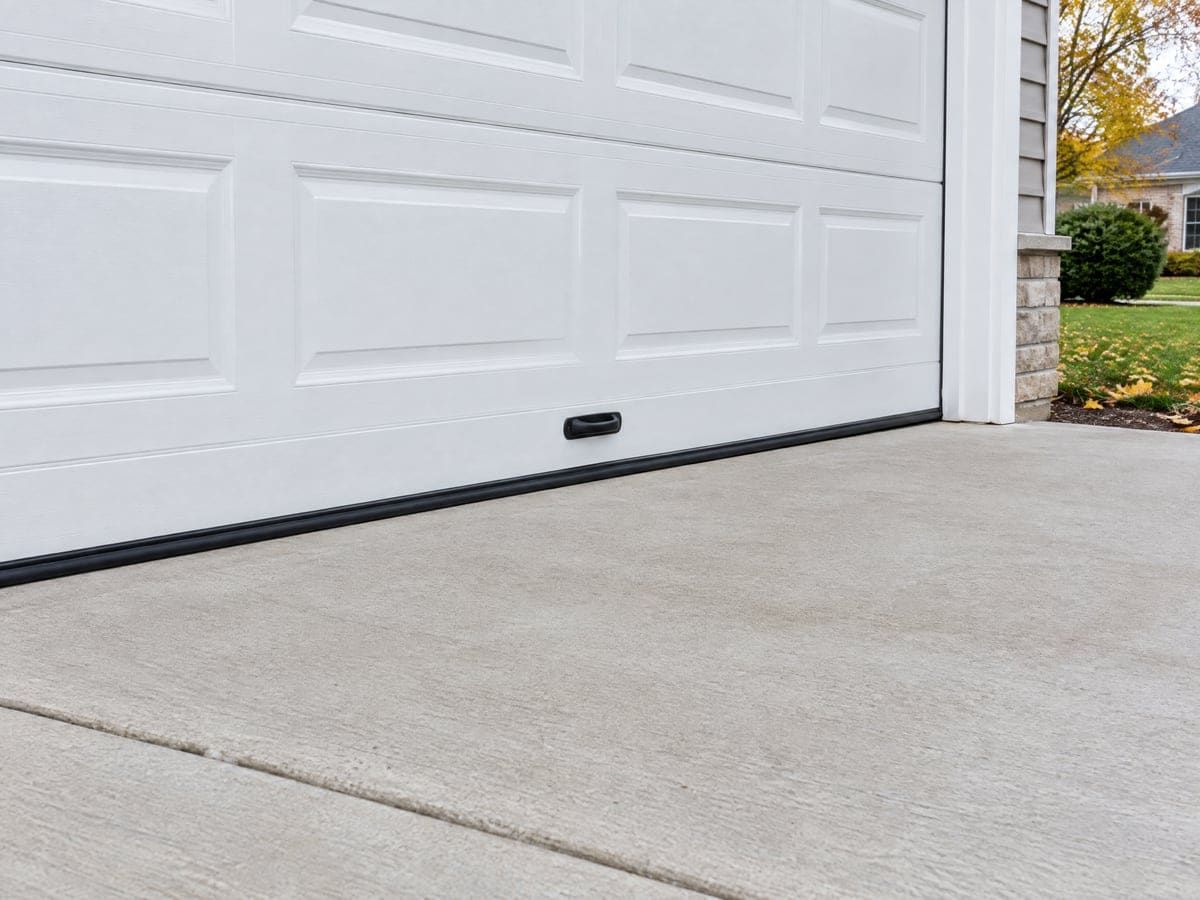
Garage door bottom seal replacement: a new rubber seal meeting the apron evenly under a white door.

Where is the seal failing?
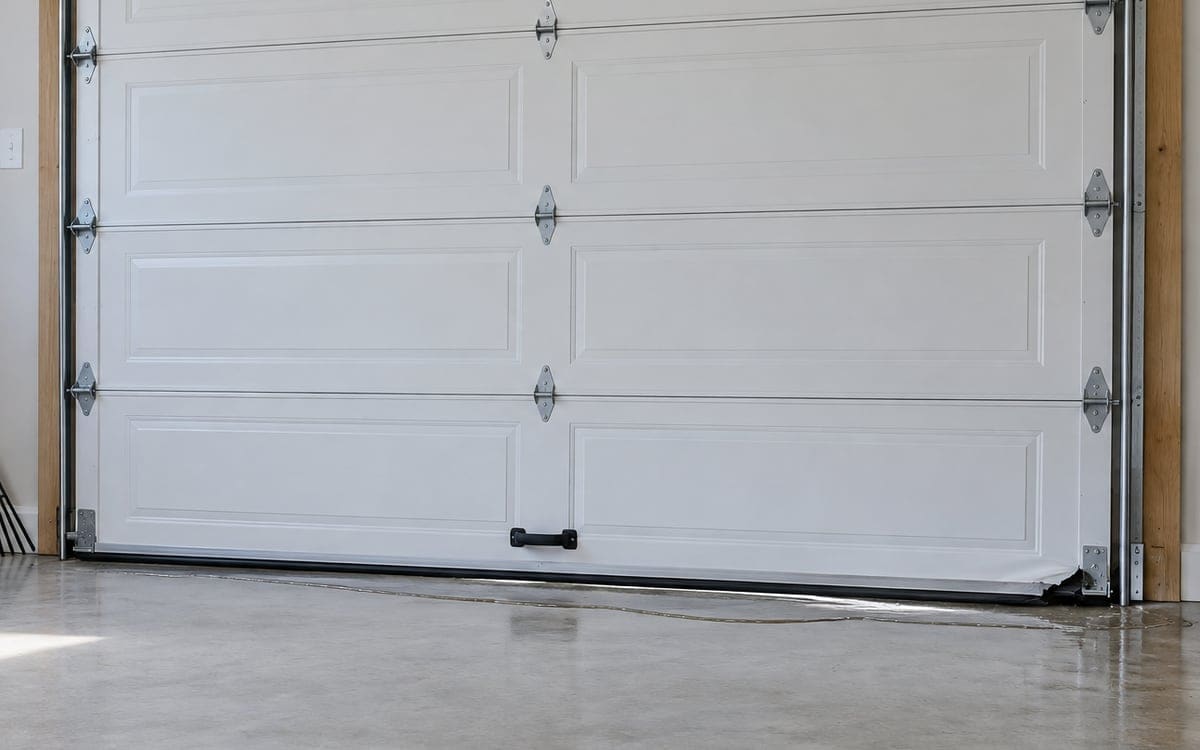
A closed white door seen from inside, its garage door bottom seal resting on the concrete floor.

The bottom seal, sometimes called an astragal, slides into a retainer along the lowest section of the door. On a wood door of a certain age the seal is a nailed-on strip of rubber instead. Either way, when it fails the door looks fine from the curb and the trouble shows up on the floor.

1. Light and gaps along the bottom with the door closed

The first check runs from the inside with the door closed and the garage lights off. Daylight along a corner usually means a torn end of the seal, where the rubber has pulled out of the retainer or split at the lip. Daylight straight across the middle more often means the whole strip has flattened out and is no longer touching the slab under its own weight. A long edge of light along one side can also point at a settled slab rather than the seal itself.

2. The rubber and the retainer

A finger run along the bottom of the door picks up a dry, cracked, split or torn seal. The retainer underneath is an aluminum channel with a slot shaped to hold the seal in place. We look for a bent flange, a corroded channel, and the condition of the fasteners.

3. An uneven floor or a sunken slab

Older garage slabs settle. A seal that fit the floor in 1972 may be meeting a slab that now dips an inch at one corner. The gap in that case is at a known spot every winter. A taller bulb-style seal or a floor-side threshold strip usually brings the door back to a flat close.

4. The side and top stop molding

Weather stripping along the jambs and across the header does a different job than the bottom seal. A gap at the side or the top is usually about the stop molding and the gasket on it, not the astragal. The two often get replaced on the same visit.

5. A seal frozen or stuck to the slab

An overnight dip can bond the rubber to the concrete. The opener will put a load on the hardware trying to pull the seal free, and the door strains against a bond that was never meant to carry that force. Switch the opener off at the breaker if it is still trying, and leave the seam alone. Prying with a bar can split the rubber down the middle, and hot water across a cold slab can crack the slab's surface or refreeze into a thicker bond. A technician brings the right heat source, frees the seam, and swaps a torn astragal on the visit.

6. The opener's close limit after a new seal

A fresh, thicker seal changes where the door meets the floor. The opener's close limit then needs a small shift so the door is not fighting the seal on every close or stopping short. We set it on the way out.

Symptom Likely cause What it usually needs
Daylight along a corner A torn end of the seal A new seal and retainer end cap
Daylight across the middle A flattened or cracked rubber A full seal replacement
Daylight along the jamb Worn stop molding and gasket New stop and side seal
Water or slush inside after a storm Flattened seal, or a dipped slab A new seal, or a bulb-style with a threshold
Seal stuck to the slab in the morning Rubber frozen in overnight Thaw the seam, then check the rubber
Door reverses after a new seal Close limit set to the old height Opener limit set to the new seal

When fresh rubber is enough and when the bottom section needs work

When a new seal is the whole repair

If the retainer is sound and the lowest section of the door is straight, a new seal slides in and the floor goes dry again. A tune up that checks the seals folds a fresh astragal into the yearly visit. A seal change on a door of a standard width is a short job.

When the bottom section needs work

A retainer that is split, corroded through, or pulling out of the bottom section is a different job. Rot or rust in the lowest section of the door itself means that section has to go. On a wood door the sill of the lowest board sometimes needs a new nailed-on strip and a sealant along the end stiles. If the lowest section is past saving, a rusted or rotted bottom section is the next page.

At the door we show you what the seal, the retainer and the lowest section each look like and lay out the number for each option. If the door is old enough that section parts are no longer made, new doors with new seals is the other option we price.

What a technician brings for a seal replacement

The van carries bulb-style and T-style seal rubber in common widths, aluminum retainers in the standard profiles, a few sections of threshold strip for sunken slabs, side-jamb stop molding with weather stripping already attached, screws and fasteners in the sizes that bite into weathered jambs, and a putty knife for scraping a hardened old seal out of its retainer. A model-specific section for an older wood door may still need an order.

A seal visit in Barrington, from the call to the close test

  1. You tell us where the daylight sits along the bottom, whether water came in during the last rain or snow, and roughly how old the door is.
  2. The technician arrives, checks the bottom with the door closed from inside, and then looks at the retainer, the stop molding and the slab.
  3. We walk you through the fix and the price before any of it starts.
  4. The seal and whatever stop molding needs it go in, the opener's close limit gets a small shift, and the door runs twice while you watch, including a close with the garage lights off to see where the daylight has gone.

Calls may be recorded. A short notice plays before the call connects.

What a Barrington winter does to a bottom seal

A long salt-and-brine season sits on a bottom seal for most of winter. At the official Chicago climate site, the normal first measurable snowfall of 0.1 inch or more falls on November 18 and the normal last on April 2, which is the stretch when a seal is actually working against water and salt.

The de-icer the Village uses does its own part. Barrington uses a mixture of salt and calcium chloride for ice control, supplemented with a liquid de-icer made of salt brine, calcium chloride and a sugar-beet de-icer. That mix is tracked onto the apron on tires. Barrington has more than 3,800 driveways and the Village cannot clear the snow plowed onto any of them, so the ridge the plow leaves at the end of each driveway is the owner's to clear. Slush and brine then get tracked up the driveway to the apron, where the bottom seal sits in them for days at a time; the rubber loses its spring and dries out. Slush at the foot of the door covers the chemistry side, and seals and insulation together covers how the two pair up on an older garage.

Barrington garage door bottom seal: your questions

How often does a garage door bottom seal need replacing?

A seal lasts as long as the rubber keeps its spring. A door that sits in a dry garage with no sun on the opening can hold a seal for several seasons. A west-facing door that catches sun and takes winter brine often wears one out faster. The fairest answer is to replace when it looks flat, torn or cracked.

Can you replace only the bottom seal?

Yes, as long as the retainer is sound and the lowest section of the door is straight. The rubber slides out and a fresh one slides in. On a wood door with a nailed-on strip, the strip comes off and a new one goes on with the same fasteners or a slightly longer set.

What about the weather stripping on the sides?

The jamb stops and the gasket on them are a separate job from the bottom seal, but we usually book them together. A gap at the side has the same look from inside as a gap at the bottom: light along a line, and sometimes water after a rain.

Why does my door freeze to the floor in Barrington winters?

The seal catches the slurry on the slab and the two bond together overnight when the air drops below freezing. A door frozen to the floor is a check that comes before any repair, and the fix is thawing the seam rather than lifting with the opener.

Will a new seal keep water out?

A fresh seal on a flat slab holds back meltwater and blowing rain. A fresh seal on a slab that has settled still shows a gap at the low corner. A taller bulb seal or a threshold strip at the floor closes that one. We size the fix to the slab at the door.

Does a new seal change how the opener closes the door?

Yes, which is why the opener's close limit gets a small shift at the end of a seal visit. If the limit is left where it was for the old flattened rubber, the door either slams the new seal into the slab or stops short with daylight again. A door that reverses after a seal change usually points at the limit, not the sensors, but a door that reverses after a seal change is the right page if the fault keeps up.

What drives the cost of a seal replacement?

Three things: the width of the door, whether the retainer needs replacing too, and whether side stops or a threshold strip go in on the same visit. A single-car door with a sound retainer is the shortest visit; a wide door with new side stops and a threshold is a longer one.

If light is showing under your door, call (847) 534-5389. Where the gap is, when it started, and whether water came in last storm is enough on the phone. The callback form below the number holds a message if you would rather be reached later.

Something wrong with the garage door?

Describe what you see and hear to someone who repairs garage doors.

Call (847) 534-5389

Calls may be recorded. A short notice plays before the call connects.

Browse all services

Rather we call you?

Leave your name and number and we will call you back.

We use your number only to call you back. Privacy policy