Choosing the opener for the garage
The right opener for your garage depends on what the garage is used for, how the door is built, how much headroom sits above it, and how often the power goes out on your street. We talk through each of those before we quote a unit.
How the garage gets used
A garage above a bedroom is a different problem from one on the far side of the house with a shop beyond it. Noise, lift speed, and whether a battery backup matters turn on how close people are to the opener while it is running.
What the door weighs
A single-layer uninsulated steel door is light. A double-layer insulated steel door is heavier. A composite overlay, solid wood or insulated three-layer door is heavier again. The opener's horsepower rating is less important than whether the unit is specified for the door's weight and width.
The ceiling and the headroom
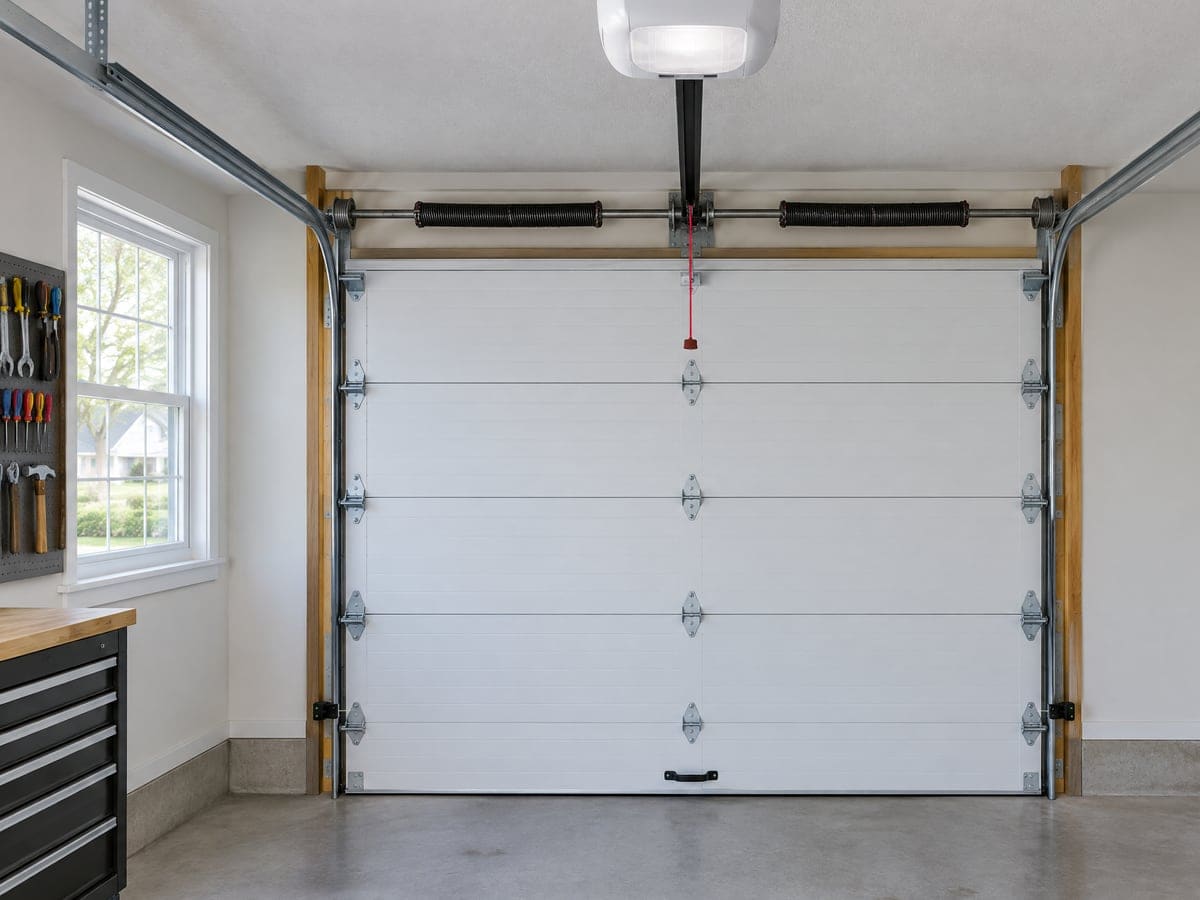
Older garages often have less headroom than newer ones. A trolley opener needs a rail hanging from the ceiling; a wall-mount jackshaft opener bolts to the end of the torsion spring shaft and clears the ceiling. Where the ceiling is finished or occupied above, a wall-mount is often the only clean fit.
Battery backup and phone control
Power goes out, and a garage door becomes a wall. Battery backup keeps the opener running for a day or two on short runs; some units carry it built in, others accept an add-on battery. On newer units, phone control is bundled in alongside the battery option: you can see from a phone whether the door is open and send the close command remotely.
The drive types in plain words
Chain drive is the sturdy, loud choice. A metal chain pulls the trolley along a rail, which keeps parts cheap and the system forgiving to service. On a detached garage or over a workshop, the noise is rarely a problem.
For an attached garage near a bedroom or living space, belt drive is the usual pick. A reinforced rubber belt replaces the chain, running quietly, and lasts about as long. The up-front price is a little higher.
Screw drive runs on a threaded rod rather than a chain or belt, with fewer moving parts and a faster lift. The distinctive buzz is why we rarely install new ones, and service parts are harder to find than they used to be.
Where ceiling space is finished, crowded or vaulted, a wall-mount (jackshaft) opener is often the right call. It bolts to the wall at one end of the torsion spring shaft and turns the shaft directly, clearing the ceiling and running quietly. The up-front price is higher than a trolley unit.
| What you want | What to look at |
|---|---|
| Quiet, bedroom overhead | Belt drive or wall-mount, lift speed on the low setting |
| Low ceiling or storage overhead | Wall-mount (jackshaft) |
| A heavy wood or composite door | Opener specified for the door's weight and width |
| A garage that loses power often | Battery backup included or add-on ready |
| Checking the door from your phone | Phone control feature on the opener head |
| Reusing existing remotes | Compatible rolling-code family, or new remotes |
Install day, in order
- Door, springs and travel checked. The technician runs the door, measures balance, and looks at the springs and cables. Any of those that need work gets flagged before the new opener goes up. See springs that need fixing first when the door is not in balance.
- The old opener and rail come down. Power is off at the breaker before any opener work. The old head, rail, trolley and wall control come off. If the sensor wire from the door back to the opener is in sound shape, it may be reused; the photo-eye sensors themselves are swapped for the ones that match the new opener.
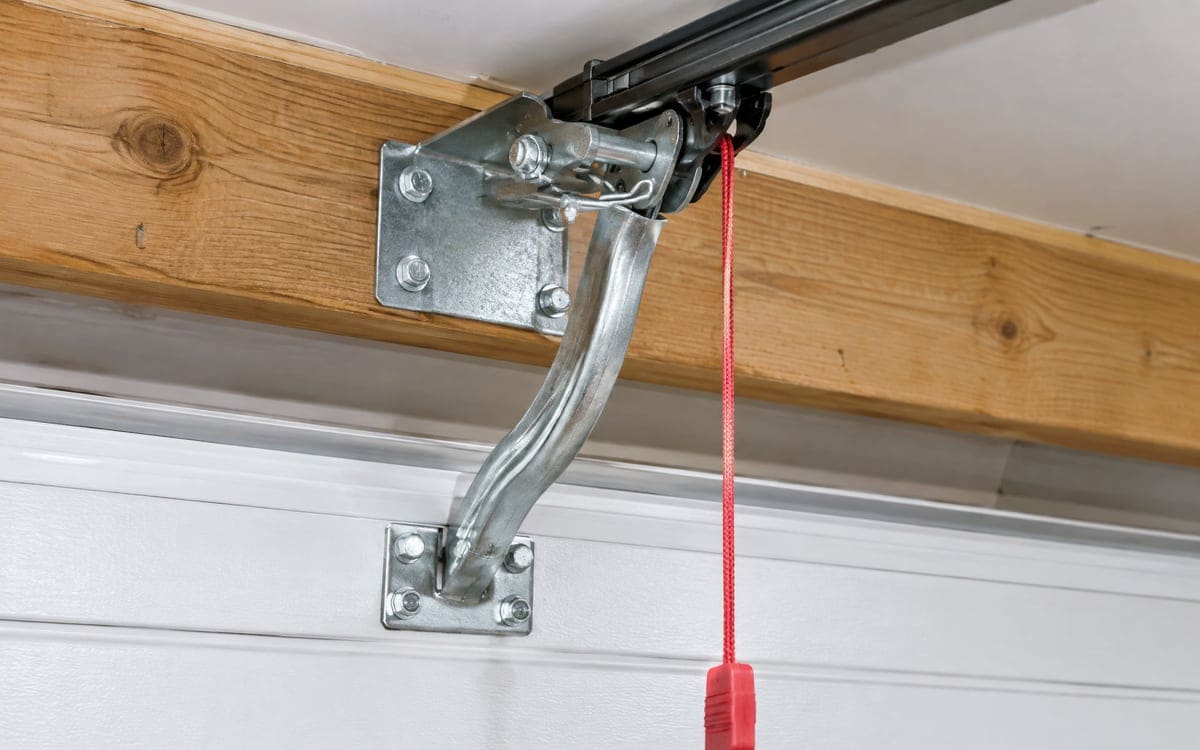
- The header bracket and the new rail. The header bracket mounts above the door to the structure, not the drywall. The rail bolts to the bracket at the front and hangs from the ceiling at the back. On an older garage, header and ceiling structure get a look first; blocking is added when the finish does not catch solid framing.
- Wall control and sensors wired. The wall control goes beside the door at adult eye level, where it belongs. The photo-eye sensors mount at six inches above the floor on each side of the door and face each other. Wires are tucked and stapled.
- Travel and force are set. The opener learns the up and down positions for the door, and the force settings get dialed in with the technician watching the door run.
- The reversal test, with you watching. The technician places a two-by-four flat on the floor under the closing door and shows that it reverses on contact. The sensor test is run too: a hand breaks the beam and the door reverses before contact. See the sensor and reversal check each season for what to keep an eye on between visits.
- Remotes, keypad and car button set up. Each remote, the outdoor keypad, and your car's built-in button are programmed at the wall and the vehicle, not up the ladder.
- A working outlet within cord reach. The opener needs a working ceiling outlet in the right place. If the current outlet is dead, badly placed, or has a tripped breaker that will not hold, we flag it on the quote and recommend an electrician.
When a new opener makes sense
A new opener is the right call when the unit is old enough that photo-eye sensors are missing, when the brand's parts are gone from the shelf, when two or more parts would need replacement at once, or when the door itself is being replaced and the new door is heavier than the old one. If the opener is still catalog-current and only one part has failed, repairing the opener you have is usually the better call.
On a new door install, we often set a new opener alongside, because the force profile of the new door will be different and a tired head unit tends to show it fast. See a new door and opener together.
What our installers carry
On a scheduled installation the van carries the opener unit, a spare rail in case of shipping damage, header bracket hardware for timber and for blocking, photo-eye sensors with wire runs for older garages, rolling-code remotes, a keypad, the backup battery, and test tools. We do not bring an electrician; a dead outlet is a referral.
From your call to a working door
The call sets the appointment and the model we are quoting. On arrival we check the door and confirm the opener fits the door; the price and any extra work are agreed before we open a box. A wall-mount in place of a trolley unit, blocking added for a header that does not catch solid framing, or spring and roller work on the door before the opener goes up will all add to the install. At the end, you see the reversal test, the sensor test, and your remote working.
Older Barrington garages and new openers
Finished ceilings and low-headroom garages are what shape most opener installs in the village, because about 67 percent of Barrington's housing was built before 1980. A new opener hangs from the ceiling framing or the header above the door, and the hanger bolts need to catch solid framing rather than drywall alone. On a garage with a finished ceiling, our installer adds blocking before the opener goes up, so the head unit sits in something that will hold.
In an older garage with a low ceiling or crowded overhead space, a wall-mount jackshaft opener is often the cleanest fit, staying off the overhead frame and keeping the walking height clear. See heavier insulated doors for how an insulated upgrade and a new opener often go together.