Track and bracket repair, Barrington

Barrington garage door track repair for bent or loose track

A door that hesitates at the same height every run, or pops out of plumb at one hinge, is usually telling you about its track. Garage door track repair in Barrington straightens or replaces the channel the rollers run in; a bent, loose or rusted track makes the door run crooked until the channel is true again.

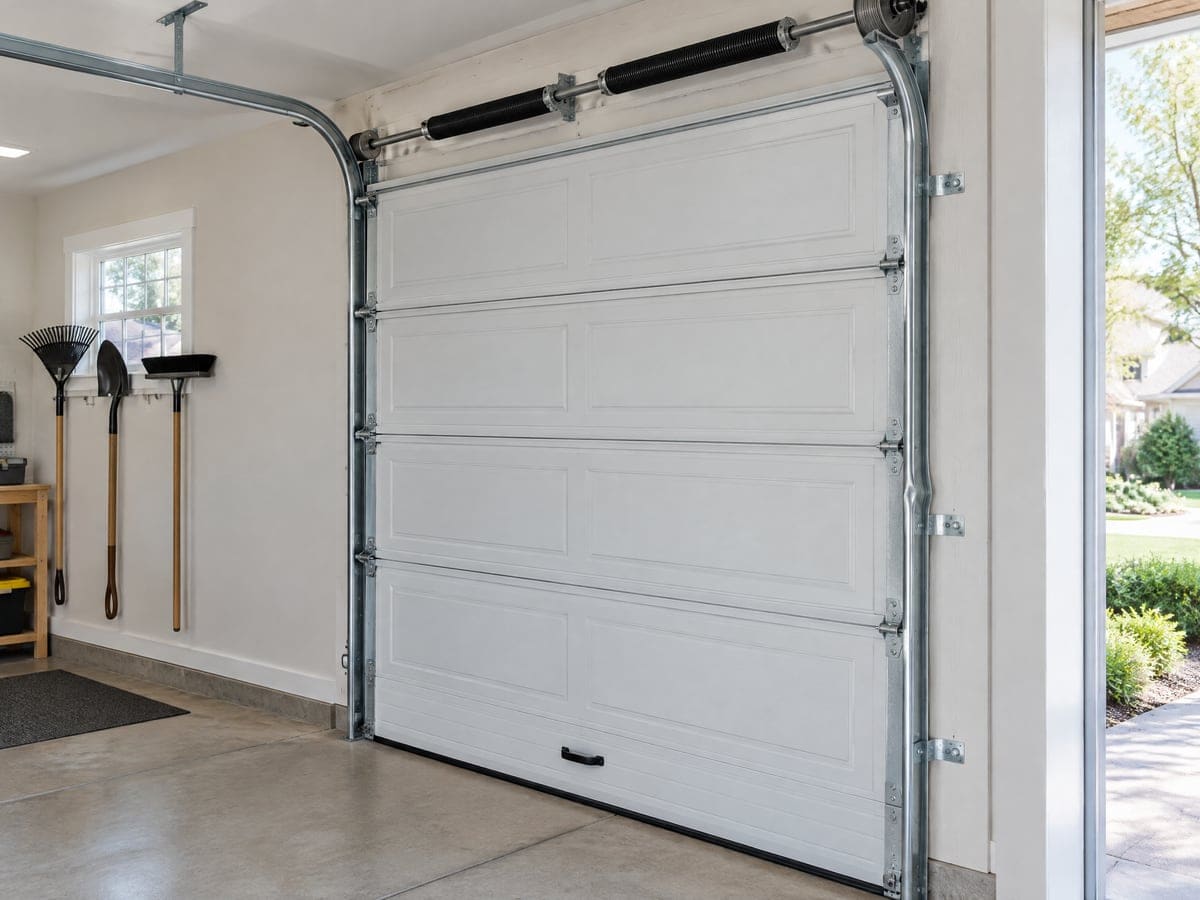
Garage door track repair: the vertical tracks and torsion spring of a single door in a tidy older garage.

The spot where the door catches
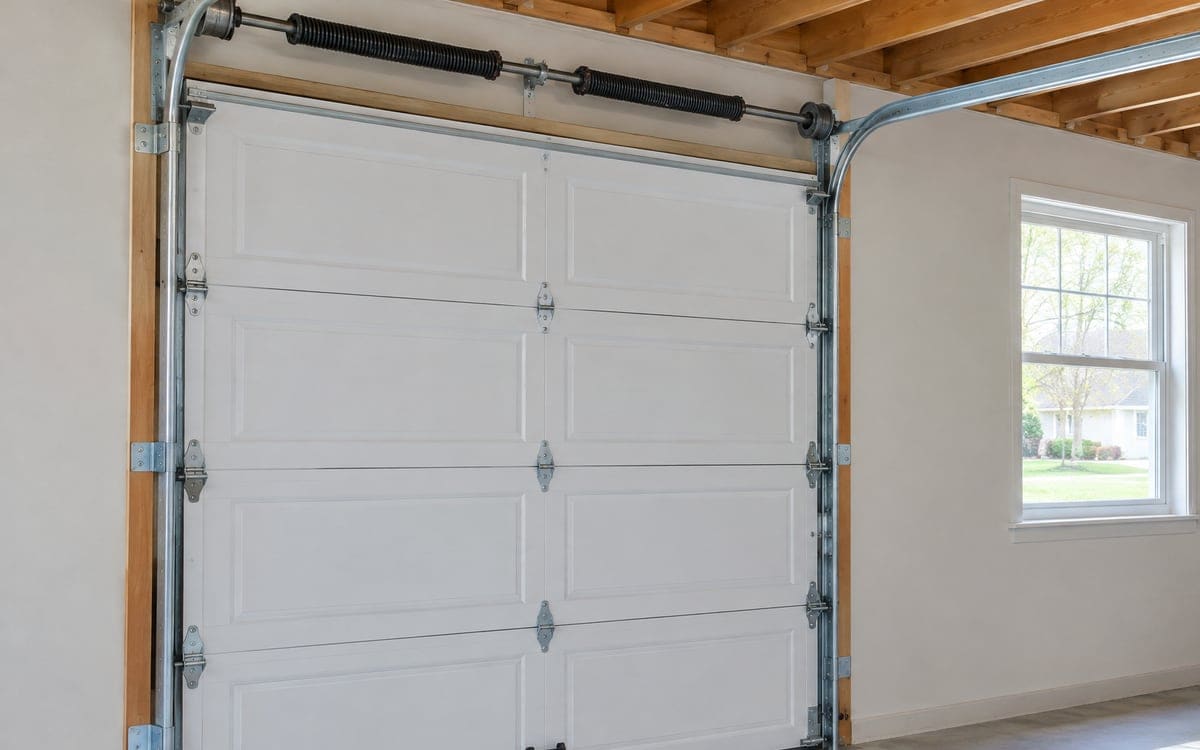
A horizontal garage door track running back under open ceiling joists to its rear hanger.

A track fault is more consistent than a roller fault. The door hesitates at the same height on every cycle, not at random. A technician works that consistency back to the specific inch of track that is at fault.

1. Door closed, opener breaker off

A good check starts with the door closed and the opener dead at the panel. A rolling door hides most of its track behind the moving section, while a still one lets a technician lean a straightedge against the vertical track and sight along the channel without a roller moving.

2. Sighting down each vertical track for dents and bends

A dent shows as a tiny shadow against a straightedge or a flashlight shone along the channel. A twist shows as a wheel that would run tilted at that height. The two sides of the door get checked against each other too, because a track that looks straight on its own may still sit a quarter inch out of parallel against its partner.

3. The gap between roller and track

With the door still, a technician measures the gap at each hinge between the roller's shoulder and the inside face of the track. An even gap along both sides is normal; a gap that widens at one spot, or grows along the track, means the track is pulling away from the jamb or the roller stem is bent. A gap of zero means the roller is binding, which chews up the wheel and the track together.

4. Jamb brackets and lag screws, and the wood they bite into

The track screws to the jamb through flag brackets at the top and jamb brackets along the length. On an older Barrington garage, the lag screws bite into stained or painted wood that has been through a few generations, and the screw holes are often reamed. A loose bracket on good track looks the same at the door as a dent on sound bracket, which is why the two get checked together.

5. Horizontal tracks and the rear hangers

The horizontal tracks run back from the top of the opening and hang from the joists on perforated hangers. A sagging horizontal is a door that drops out of the channel at the back on each cycle, which pulls the rollers hard every time. The rear hangers get checked for loose nuts, bent legs and the lag screws where they meet the joist.

6. Rust at the foot of the vertical tracks

The bottom foot of each vertical track lives on the garage floor and sees the salted meltwater that drips off a car in winter. A pitted track at that height holds a wheel a little tighter than it did a few years ago, and that is where the loudest noise from a tired door often sits. On an older Barrington door the fix is a vertical replacement at the bottom foot or two, rather than the whole length.

Symptom Likely cause What it usually needs
Door catches at the same height Dent in the vertical track Straighten or replace the dented section
Door jumps the channel at one hinge Loose jamb bracket or bent track Rebracket, reset the track to plumb
Horizontal track sags toward the back Rear hanger loose or bent Tighten or replace the hanger, resquare the track
Rust and pitting at the floor Salt and brine at the bottom of the track Replace the bottom foot of the vertical track
Soft or split jamb next to a bracket Water and age in the wood framing Backing plate or new jamb reinforcement
Door rises crooked on fresh cables Track out of parallel side to side Resquare both verticals, recheck the balance

When the track is straightened and when it is swapped

A dented track can usually be either straightened or replaced, and the technician makes that call at the door. Straightening is cheaper, replacing is cleaner, and which one makes sense depends on the shape of the dent and the state of the metal around it.

When straightening is the answer

  • A gentle bend from a one-time impact, with no cracks or stretched holes around it
  • A loose bracket on a track that is otherwise straight, so the fix is the bracket, not the channel
  • A slightly out-of-parallel track that comes back to plumb with a bracket reset

When the track gets replaced

  • A sharp dent with a crease that has started to crack the channel
  • A rusted foot at the floor that is pitted all the way through
  • A kink from a cable snap that twists the vertical, which no amount of tapping brings back
  • A horizontal track that is wavy enough along its length that a rear hanger reset will not square it

A track replacement does not usually mean the whole run. The vertical often gets replaced from the floor up to the first bracket above the damage, and the horizontal from the back to a seam in the middle. Where the damage runs through the whole piece, a full length goes in.

What our technicians bring for a track call

A track call gets a van loaded with vertical and horizontal track in the common gauges and heights, flag brackets, jamb brackets and rear hangers, long lag screws for the reamed holes an older garage leaves behind, backing plates for a split jamb, roller sets in case the rollers running on bad track are at the end of their life, a straightedge, and the clamps that hold a section during a jamb reset. A tall opening or a glass-and-wood door section may need a return trip for matching track.

The visit, start to finish

  1. You call. Describe the spot where the door hesitates, whether the sound is a scrape or a bang, and whether the horizontal tracks look level from a safe spot. A track call sounds different from a full door diagnosis; the sentence on the phone usually tells us what to bring.
  2. A technician arrives, shuts the breaker off, and checks the vertical and horizontal tracks from the floor and from the ladder, with the door closed.
  3. Options and price. We explain the fix (whether the track gets straightened or replaced, which brackets go with it, whether the rollers that have been running on the bad spot need to be swapped) and give the price for each option. The household picks which pieces to do today.
  4. The repair and the test cycle. The door comes down under support if a jamb reset is in play, the track or brackets go on, the horizontal gets resquared, and the door runs its full cycle a few times with the balance and reversal both rechecked.

Calls may be recorded. A short notice plays before the call connects.

Older framing and winter brine around Barrington tracks

Age and salt are the two local reasons track work in Barrington looks a little different. Most of the Village's houses are not new: about 67 percent of homes were built before 1980, and an estimated 13 percent go back to 1939 or earlier. A garage from the 1960s and 1970s usually has wood jambs that have taken decades of weather, which means a jamb bracket's lag screws land in a hole that has been reamed by water, re-painting and the last two sets of brackets. At the floor, the Village treats streets with a mixture of salt and calcium chloride, with a liquid de-icer of salt brine, calcium chloride and Geomelt, and the brine comes into the garage on tires every winter night. The foot of each vertical track lives in that puddle until spring. The older-home write-up and the road salt guide carry the longer version.

Track repair in Barrington: your questions

Can a bent garage door track be fixed?

Often, yes. A gentle bend from a one-time impact, on a track that has no cracks and no stretched bracket holes, straightens with the right dolly and clamp. A sharp dent that has started to crack the channel, a kinked track from a cable snap, or a rust-through at the floor gets replaced instead. The call is made at the door, after the inspection.

Why does the door stick at one spot?

A dent, a loose bracket, or a rusted foot of track at a particular height. The door's rollers run smoothly until they meet the fault, then they bind or jump out of the channel, then they settle on the other side. The same height on every cycle is what tells a technician which inch of track to look at.

Can I tighten the track brackets myself?

Bracket work is on loaded hardware, so it stays on the van. From the floor, a homeowner can see a bracket that is sitting out of plumb or has backed off, note which one and whether the jamb around it looks sound, and mention it on the call. The decision between a tighten, a backing plate or a longer lag is a technician's.

Should the tracks be greased?

Track channels run dry, and grease catches the grit from the garage floor and turns the channel into sandpaper. The rollers' stems and the hinge tubes take a spray from the floor; the inside face of the track stays clean.

Why is the bottom of my track rusting in Barrington?

Winter brine sits at the garage floor, which is where the vertical tracks end. Over a few seasons the pitting on the inside face of the channel is enough to grab a wheel on a cold morning. See the road salt guide for the long version and the panel replacement page for when the bottom section has been chewed up by the same brine.

What happens if I keep using a door with a bent track?

Rollers go first. A wheel running against a dented channel wears a flat spot in a few cycles, then starts to crack. If the dent is bad enough, a wheel jumps the channel and the door comes off the track entirely, which is a bigger job than a straighten.

Keep the door closed and switch the opener off at the breaker. A technician will put a visit on the schedule once you ring us at (847) 534-5389. The callback form on this page works the same, if a return call fits better than a pickup.

Something wrong with the garage door?

Describe what you see and hear to someone who repairs garage doors.

Call (847) 534-5389

Calls may be recorded. A short notice plays before the call connects.

Browse all services

Rather we call you?

Leave your name and number and we will call you back.

We use your number only to call you back. Privacy policy