What to do while it hangs
None of the steps below ask you to touch loaded hardware, pull the emergency release, or lift the door by hand.
1. Stop using the opener and switch off its breaker
A door off its track will take the opener down with it on the next cycle. Walk to the electrical panel, find the breaker labeled for the garage circuit, and flip it off. Leave the opener's cord alone while the door is open or hanging. If the breakers are not labeled, flip the one that controls the garage lights.
2. Keep everyone clear of the door
The door and the hardware above it are under spring tension. If the cables are slack on one side, that tension is pointed in a direction the door was not designed for. Keep children, pets and parked cars out of the garage until our technician is on site.
3. Leave the emergency release alone on a hanging door
The red cord in the ceiling disconnects the opener from the door. On a door that is tilted or hanging, pulling it drops the whole weight of the door onto a crooked rail. Leave it alone, even in a power outage.
4. From a safe spot, note what you can see
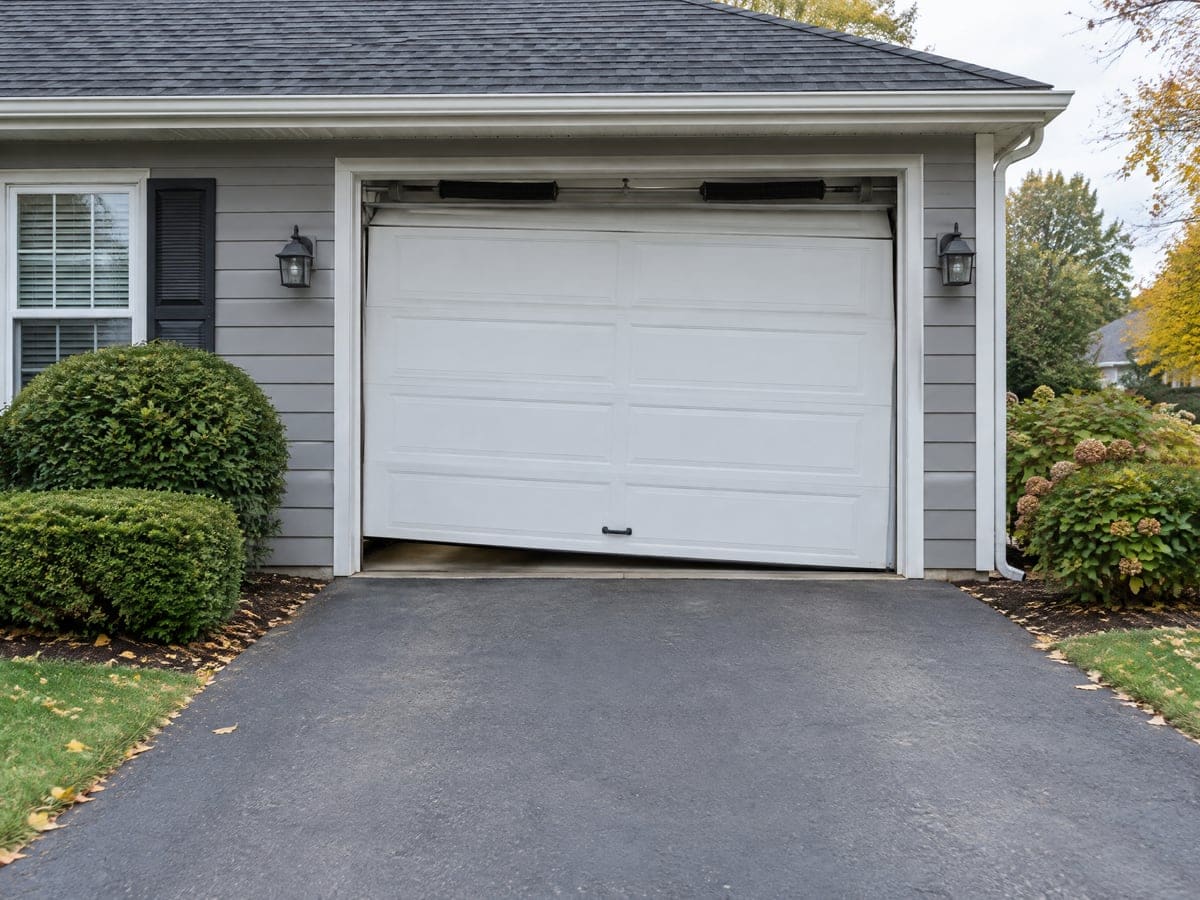
Standing well back, look at the door and note which side came off, where the rollers sit, whether a cable is slack or hanging loose, and whether a section of the track is visibly bent. If a car bumped the door, note where the contact happened. All of that helps the technician on the call.
5. Phoning once the breaker is off
With the breaker off and the garage clear, pick up the phone. The sooner someone looks at the door, the less chance it moves on its own under the weight.
Why doors come off their tracks
A door almost never jumps the track on its own; some outside event put it there. Walking back from the symptom tends to find one of these.
A car bump at a bottom corner
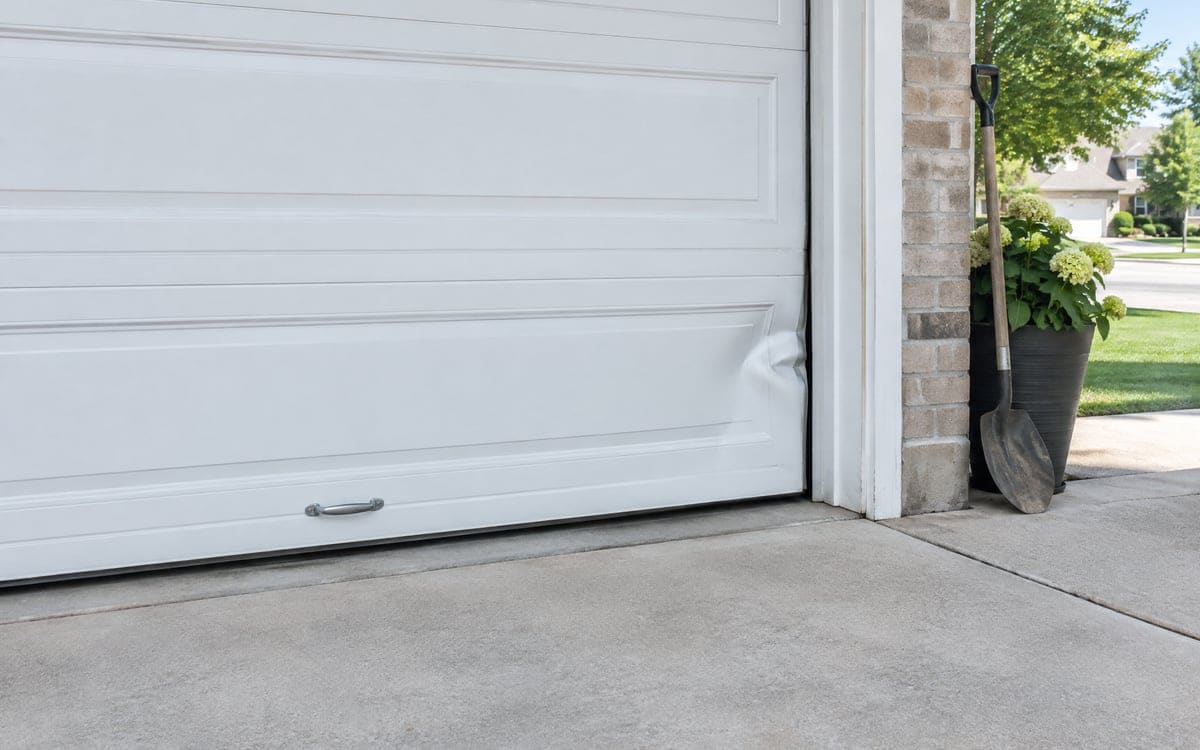
A reversing bumper hitting a bottom corner is the most common cause. The lower track section bends out, the roller leaves the rail, and the next cycle drags the door sideways. See bent or loose track for how that gets straightened or replaced.
A broken lift cable
The two cables run from the bottom brackets up the vertical track to the drums on the spring shaft. If one snaps or jumps the drum, that side falls. The door hangs crooked, often with a loud bang when it happened. See a snapped or slack cable.
Loose track on an older jamb
On older houses the lag bolts holding the vertical track to the wood jamb slowly loosen. One good cycle on a cold morning, the track pulls off at the top, and the rollers follow. The repair is new fasteners into solid wood or, where the jamb has rotted, into new jamb stock.
Worn rollers
Rollers that have shed their nylon or lost a stem will come out of the rail at a corner. See worn rollers for how they get replaced.
Ice or a frozen bottom seal with the opener forcing
The bottom seal freezes to the slab, the opener fires on up, and the lower section tears away from the frozen edge while the rest of the door starts moving. One side can be lifted free before the opener's force setting trips, and that side comes off the rail. Also see a spring that let go when the sound happened at the same time.
| Symptom | Likely cause | What it usually needs |
|---|---|---|
| Door tilted, one top-corner low | Snapped cable on that side | New cables both sides, drum check, roller reset |
| Rollers out at the top of the track | Loose track bolts, aged jamb | Re-anchor track, jamb repair |
| Door jammed half open | Impact or bind at that height | Track straightening or section, cable check |
| Slack cable on one side | Broken cable or jumped drum | New cable, drum reseat, winding check |
| Door off after a cold snap | Frozen bottom seal, opener force | Thaw seal, reset the door, service the opener |
When we reset and when we replace track
Most off-track doors can be reset: cables rewound, rollers seated, track straightened where it is only lightly bowed, bolts replaced where the jamb is still solid. We prefer the reset where the door and the hardware have not been damaged beyond what we see. Compare the options at a door that will not move at all when the opener is also in the mix.
We replace track when it is bent at a joint, kinked at a bracket, or has lost its line on the horizontal where straightening would just leave the next bump in the same spot. New track is one or two sections rather than the whole set, in most cases. On an impact where the door came off and the lower sections cracked, replacement moves into a snapped or slack cable and often the sections themselves.
What our technicians bring for an off-track door
An off-track door gets its own kit. Our van usually carries replacement cables in common sizes, new bottom brackets, standard roller stems with nylon wheels, replacement vertical and horizontal track sections for the common door widths, track clips and brackets, lag bolts for jamb repair, and the test tools: winding bars, a torque wrench, a laser line, and a tall step stool rated to the technician's weight. On a door with a broken spring, spring stock rides along too; we size it to the finished door on site.
A rushed off-track repair on hardware that is already strained is how a technician gets hurt, so the pace is deliberate. The door stays controlled every step until it is back on the rail.
From your call to the door back on
The call sets the dispatch. We confirm the breaker is off and that no one is standing under the door. Our technician arrives, assesses the hardware, controls the door before touching anything, and gets the rollers back in the rail. Cables, rollers or a short section of track go in as needed. The door is run through a careful cycle with the opener before anyone drives in. Follow-up work, like a cracked section or a worn spring that we spot during the reset, gets quoted on the spot.
Barrington winters and off-track doors
A long cold season gives doors more chances to come off the rail. The normal first measurable snowfall at Chicago O'Hare arrives on November 18 and the normal last on April 2, which marks out the stretch when bottom seals freeze to the slab and refrozen slush builds under the door. On the coldest mornings, the opener pulls on a door still stuck to the concrete, and the door comes off at the first corner that gives.
The fix is partly on the door, partly on habit. We service the bottom seal, check the roller stems, dial the opener's force so it does not keep pulling against a frozen door, and talk through how to spot a stuck seal before the opener is hit for the first time of the morning. See urgent help for a door that will not close when the door is already down and the garage is open to the weather.