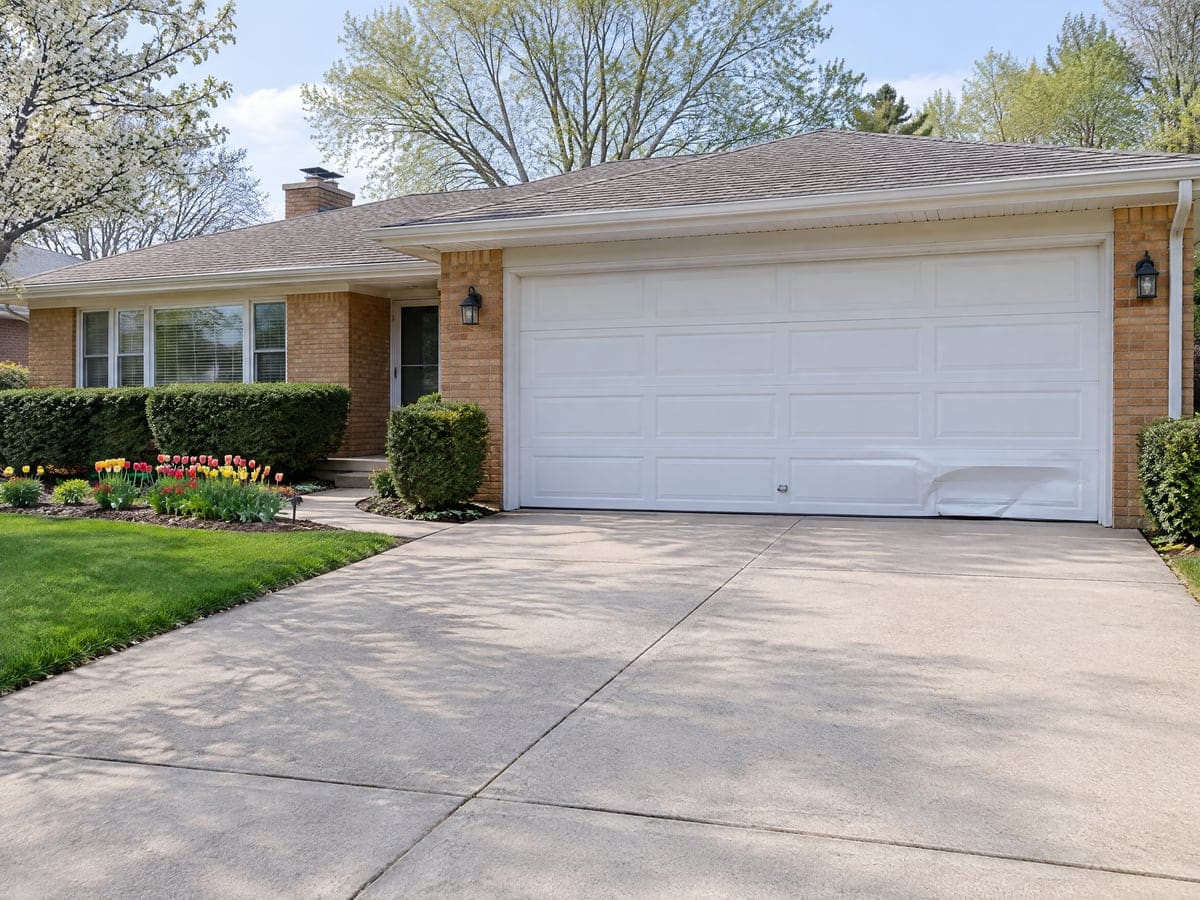
Barrington dented and cracked door sections

Garage door panel replacement on Barrington homes

A dented or split section on a garage door in Barrington is almost never only a cosmetic problem. The crease pushes on hinges, the hinges pull on the track, and the next time the door moves it binds a little harder. We look at the whole door, not only the dent.

Garage door panel replacement: a white two-car door with a creased dent in its bottom section on a brick ranch.

What are you seeing on the door?

Panel work usually starts with the obvious: a bumper mark, a long crease, a cracked end, or a section that sits a half inch out of line with the one above it. On the visit, our technician goes section by section with the door closed, then with it moving slowly, looking at how the damage has fed through the rest of the door.

1. Whether the door still runs straight

With the door closed, a straight edge across the sections shows whether the damaged section has pushed the stack out of line. A section that leans forward or back by even a quarter inch tells us the hinges are strained and the rollers are not centered in the track.

2. Hinges and section edges

The hinges across the back of the damaged section carry most of the hidden damage from an impact. A bent hinge leaf, a torn screw, or a crack along the top edge of the next section down is common. Edge cracks grow with every cycle.

3. Cracks at the struts and end stiles

The horizontal strut that stiffens the top of a wide section is a frequent casualty. So are the end stiles, the vertical steel pieces that hold the hinges and rollers at each side. A cracked end stile means the roller has nothing solid to hang from, which turns a panel job into a safety concern.

4. The manufacturer label and model

Our technician reads the label on the inside of the top section for the brand, model and color code. Finding a matching section depends on whether the model is still being made and in the color the door shipped with. The quote names the lead time and whether a close match is realistic for your door.

5. The track at the point of impact

A bump that hits the door hard enough to crease a section usually bends the vertical track too. The lower track section may bow out at the point of impact or lose a bracket. If the track is bent, swapping only a section leaves the door riding on hardware that will not hold alignment. See track bent in the same bump.

6. On a wood or wood-look door, rot or a split board

Wood and composite overlay doors show a different kind of damage. We look along the lower edge for a split board, a swollen panel, or dark lines where water has worked its way behind the paint. A split that runs through to the back face usually means the whole section has to come out; a patch does not hold on a flexing door.

Symptom Likely cause What it usually needs
Shallow dent, paint intact Light impact, section still stiff A new section if the look matters, otherwise live with it
Horizontal crease across a section Backed into the door, strut bent New section, hinges checked, track inspected
Cracked end stile at a roller Impact or long wear New section; the roller carrier is part of it
Bent hinge, section otherwise fine Flex from a crooked door New hinge, often more than one
Soft wood along the bottom board Years of ground splash, failing seal New board or section, plus the seal along a new bottom section

When one section can go back in

Replacing one section is usually the right call when the model is still being made, the color and stile pattern still match, and the rest of the door is sound: springs within their rating, cables not frayed, rollers quiet, track straight.

A new door is usually the right call when the model has been discontinued, two or three sections are damaged, the door is old enough that the color has shifted and a new section would stand out, or the springs and cables are near the end of their life anyway. Replacing the whole door is sometimes less work than hunting a match that will not look right.

Our visit starts with a photo of the manufacturer label, then a slow cycle, then a look at what is still cataloged in the color the door shipped with. Where the live catalog does not carry it, we bring color chips and show you two or three close doors so you can weigh a single-section swap against choosing a new door.

What our technicians bring to a panel job

Panel visits lean on parts checked at the same time: hinges, struts, end stiles, bottom seals, and a short stock of track clips and brackets. Most visits also carry a few spare rollers because a bent hinge frequently damaged the roller stem too. The section itself is ordered to your door and finish; we leave the first visit with a measured spec and come back to fit it.

The toolbox is built around that return visit as well. A laser level, nut drivers sized to the hinge hardware, impact drivers for stripped screws, replacement bolts, and painter's tape for marking the match line between old and new paint all ride on the van.
The visit, in two trips

A panel job usually runs as two visits. The first measures and photographs the door; the second fits the ordered section.

  1. The call. You tell us what hit the door, which section looks worst, and whether the door still runs. We note the model from your description if you have it.
  2. The measuring visit. The door is cycled slowly, measured and photographed. The label is read, the hinges and track are inspected, and we write up which section or sections have to go. The quote covers parts, labor, lead time, and whether the color is realistic to match on your door.
  3. Ordering. Once you give the go-ahead, the section is ordered to the door, in the model and color recorded at the measuring visit.
  4. The fit, with a test run. On the return visit the damaged section is removed, the new one is set, the hinges and rollers are swapped, the track is straightened or replaced where needed, and the door is cycled until it tracks true. The reversal is checked with you watching.

Calls may be recorded. A short notice plays before the call connects.

Older Barrington houses and panel matching

In Barrington village the median home was built in 1971, and about 44 percent of the housing was put up during the 1960s and 1970s. Model lines on steel sectional doors turn over every so often, so a section ordered for a door that is a decade or two old is not always a current part. On an older door, a dented section can turn into a hunt for a close match rather than an exact one, and we show you a side section before it goes on.

Houses in the Village's Historic Overlay District get a different conversation. In the district, garages and outbuildings should be repaired with materials matching the original in design, dimension, profile and texture, and any overhead garage door that mimics the original wood door in those respects will be considered by the Village. Minor repairs to a home in the district do not require Architectural Review Commission approval, though a permit may still be necessary, so owners should contact Village staff about any exterior project. Read what the district guidelines say about repairs.

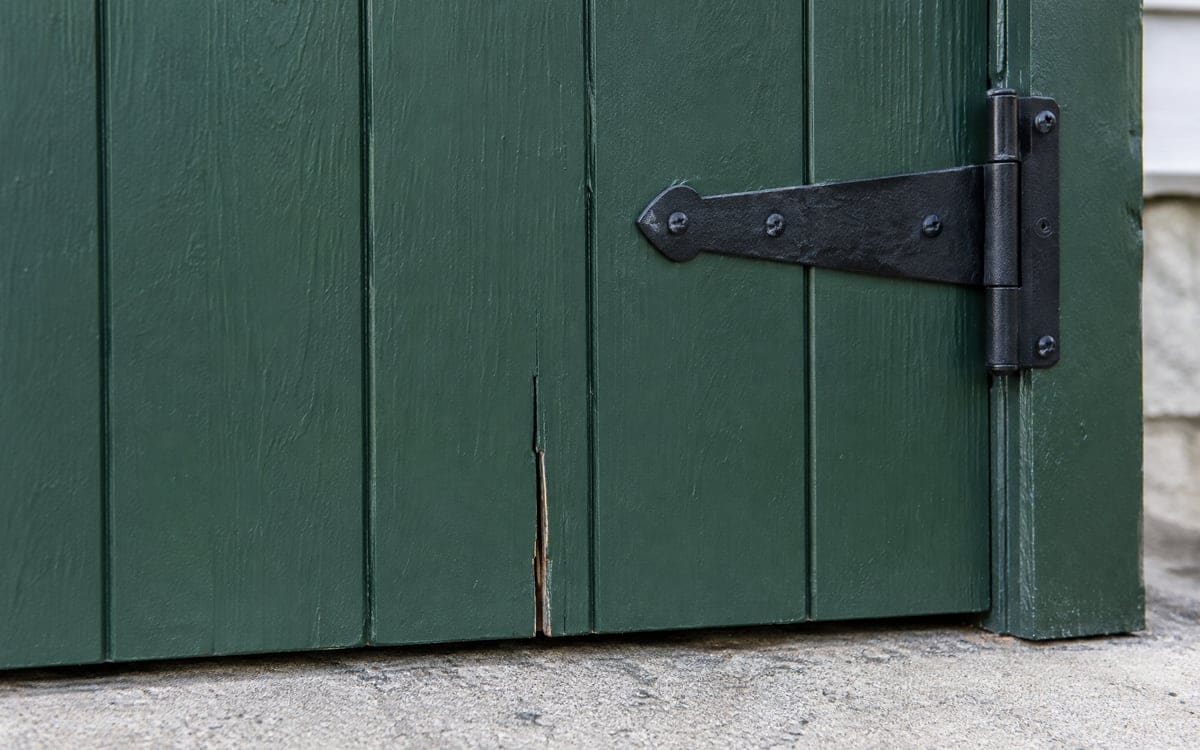
A split board at the bottom of a painted wood garage door, a case for garage door panel replacement or repair.

Panel replacement in Barrington: your questions

Can you replace a single garage door panel?

Often yes. If the door model is still in production, the color still matches, and the rest of the door is sound, a single section can be ordered and fitted. On a door whose paint has aged, a new section reads as newer, and the quote says so.

What if my door model is no longer made?

A discontinued model usually means the choice is between a close-but-visible match or a new door. We bring color chips and section photos to help you decide. A close match shows more on a front-facing door than on one facing the side or the alley, which is worth weighing before you choose. See the repair or replace table.

Will a new panel match the old ones?

The color code and stile pattern can be ordered, but a section that has lived outdoors for ten or fifteen years has usually drifted lighter from sun exposure. A new section will read as newer. We show you one next to the old door before it goes on so there are no surprises.

Is a dented panel safe to keep using?

A shallow dent with no cracked edges and a door that still runs straight is usually fine for a short while. A creased section, a cracked end stile, or a door that leans in the track is not safe to keep cycling, because the hinge and roller carrying the damaged side can tear loose under spring tension. If the door is binding or leaning, stop using it and call us.

Does insurance usually cover a door I backed into?

Policies and deductibles differ, so the answer depends on yours. Taking a few photos of the damage before anything is moved, and keeping a plain description of what failed and what the repair involves, usually helps the insurer. We do not call the insurance company for you.

My house is in the Barrington historic district: can a section be swapped?

The district's design guidelines cover what a replacement section should look like on a contributing house, and a permit may still be needed even for a repair. We quote the repair; the call to Village staff about your specific project is yours to start.

When is the next appointment?

The measuring visit happens on a weekday, and the fit happens on the return trip once the ordered section is in. The lead time depends on the model and color. If the door is unsafe to use, tell us at the first call and we will say what to do with it in the meantime.

The quickest step after an impact is to read the model label on the inside of the top section if you can get a photo of it, since that is what shortens the lead time on the fit. The number for that call is (847) 534-5389. If the moment is not right for a phone call, the callback form takes a number and we will phone you.

Something wrong with the garage door?

Describe what you see and hear to someone who repairs garage doors.

Call (847) 534-5389

Calls may be recorded. A short notice plays before the call connects.

Browse all services

Rather we call you?

Leave your name and number and we will call you back.

We use your number only to call you back. Privacy policy