Barrington garage door and overhead door service
Garage door services in Barrington, IL
A door that stopped working rarely tells you which part did it. The right page depends on what the garage door service in Barrington calls for: a repair now, a worn part caught in time, or a new door and opener.
Find the page for your door
Pick the group that sounds like your door, then the service inside it.
Broken or stuck right now
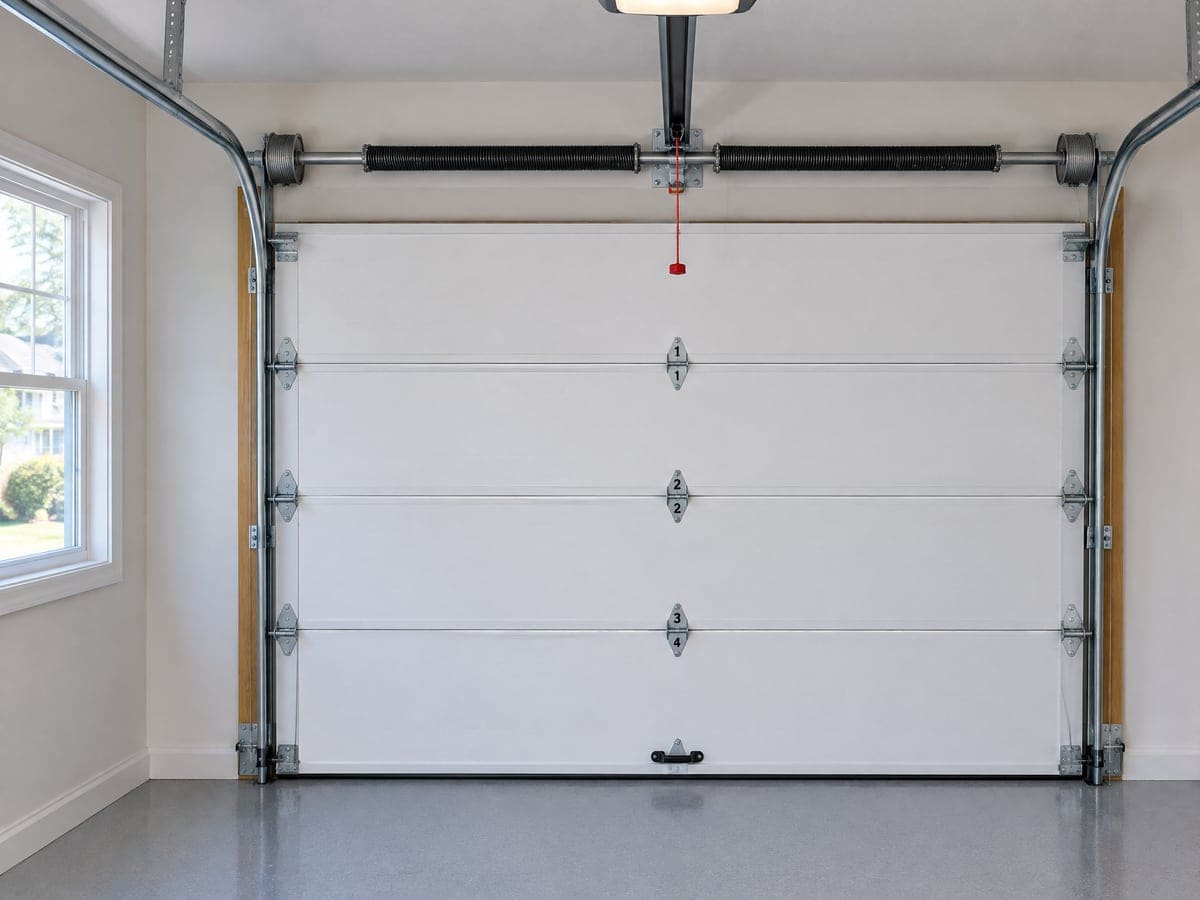
- Broken torsion or extension spring repair: a bang in the garage followed by a door that will not lift, or an opener motor humming while the sections stay put.
- Lift cable repair: a frayed, slack or snapped cable, often alongside a parted spring.
- Off-track door repair: a roller that jumped the rail at one or both sides, with sections sitting skewed.
- Door-will-not-open-or-close checks: the usual reads on a door that will not budge or stops partway.
- General garage door repair: the full diagnostic when the fault is not obvious yet.
- Photo-eye sensor repair: a door that reverses before it reaches the floor; close-limit and force settings land here too.
- Emergency garage door repair: a car trapped inside or a door stuck open.
Wear, noise and yearly care
- Worn rollers and hinges: the parts the door starts to show on first.
- Bent or loose track repair: a vertical or horizontal rail that is still in place but no longer true.
- Dented or cracked panel replacement: one section bent, cracked, or split along the hinge line.
- Opener repair: an opener that reverses, loses its remote, or will not run from the wall button.
- Noisy door repair: new sounds, sorted by cause.
- Bottom seal replacement: daylight at a corner or meltwater on the garage floor.
- Tune-up and safety check: the yearly visit on a door that still works.
A new door or opener
- New garage door installation: a first door, a changed opening or a different style.
- Door replacement: taking an old door off and hanging a new one, matched to the house; on a historic district address the design guidelines come into the picture before anything is ordered.
- Opener installation: a chain, belt or wall-mount opener matched to the door's size and weight, with the sensors and the reversal force set before the first run.
When you can't tell what failed
On the phone, these are the details that help:
- The sound the door made, if there was one.
- Where the door stopped, if it moved at all.
- Whether the opener runs when the wall button is pressed.
- The color of the opener's light, and whether a sensor light near the floor is blinking.
- The door's rough size, single or double, and the material if you know it.
Until a technician looks, leave the hardware alone. The springs, the lift cables and the bottom brackets carry the most tension with the door closed. The emergency release is not a homeowner tool and should stay in the trolley. If the door is open and will not come down, turn off the opener's breaker at the electrical panel rather than reaching the outlet in the ceiling, and keep clear of the door.
What every visit covers
A visit starts with the door closed and the opener's breaker off. The technician looks at the springs and the shaft, the cables and drums, the rollers and hinges, the track and the brackets that hold it to the jamb, the sections and seal, and the opener and its sensors. The balance check and the safety reversal both happen on the door, and the tune-up and safety check page lays out each one.
Related pages:
Older Barrington houses and the doors on them
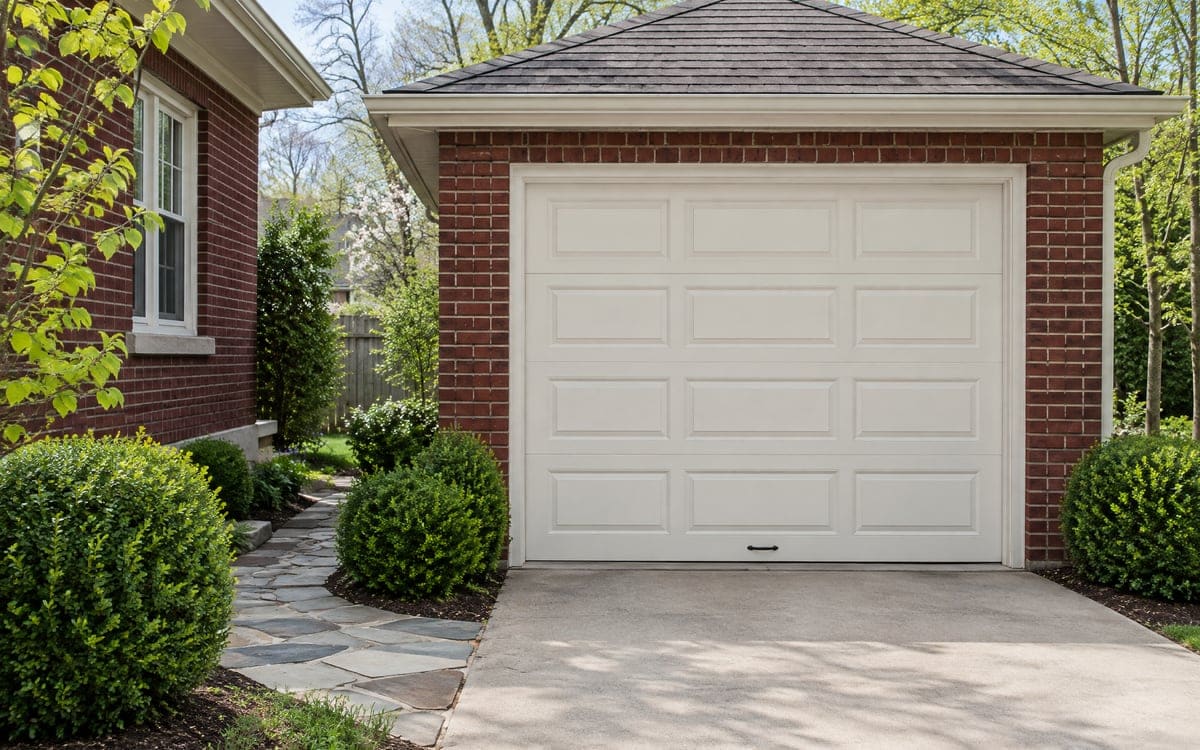
About two in three homes in the village were built before 1980,1 and roughly one in eight dates from 1939 or earlier.1 Older garages often have painted wood jambs and sloping floors, with hardware fitted at any of several past jobs.
Northern Illinois averages 140 days a year at or below 32 degrees and 16 at or below 0.2 The Village says it uses a mixture of salt and calcium chloride for ice control, supplemented with a liquid de-icing material made of salt brine, calcium chloride and Geomelt.3
Related pages:
Doors on historic district houses
Houses in the Village's historic district carry an extra step for any exterior work. Owners should contact Village staff about an exterior project before a door is ordered or a section is replaced. We ask about the house before weighing a new door, and we point owners to Village staff whenever a Certificate of Appropriateness may be in play.
Related pages:
What we do not work on
Residential garage doors are the full extent of this list. Commercial overhead doors, loading dock doors and driveway gates are different trades. If a job turns out to be on a commercial door, we will say so.
Common questions about picking a service page in Barrington
Does my historic-district address change which service page I need?
The repair pages are the same for a house inside the Overlay District as for one outside. What changes is the replacement side: the Village reviews exterior changes in the district, so a new-door conversation on an Overlay address starts with the Village before the door is ordered.
What does a loud door usually mean?
A roller, a hinge or the opener itself is the usual source of a new sound. A door that still runs but has gotten louder reads on the noisy door page, with the common sounds sorted by what each tends to point at.
Is overhead door repair the same as garage door repair?
For houses, yes. "Overhead door" is the trade name for the sectional door that rolls up along a horizontal track above the opening, the kind on nearly every residential garage. On commercial buildings, "overhead door" also covers rolling steel doors and loading-dock doors. This site stays on the residential side.
Do you work on commercial doors or driveway gates?
Residential garage doors are the only work on this list. The hardware and the codes on commercial, dock and driveway gate jobs are different trades.
How often should a garage door be serviced?
Once a year is the usual answer. Twice is worth doing on an older door or one that sees heavy use. A tune-up covers a hardware pass and both the balance test and the safety reversal.
What should I say when I call?
The sound the door made, where it stopped and whether the opener runs on the wall button and the remote. Also the rough age of the door and the opener, and the make of the opener if you can read it off the sticker.
Does the age of the house change which parts are likely to fail first?
The age of the hardware matters more than the age of the house, since springs, cables, rollers and bearings run on their own cycle counts. On a pre-1940 house with a wood overhead door, the hardware around the sections and the jamb framing both see more wear than on a 2010 build.
Is a broken garage door an emergency?
Where the door landed decides. A door open over a garage you cannot close, a car trapped inside, or a door hanging on a snapped spring or cable is urgent. A door that still lifts but has gotten louder, or that stops short of the floor by an inch, is not urgent.
When does replacement make sense instead of a repair?
Replacement starts to pay off when a door is past saving: cross-door cracking, a model the maker no longer offers, or a running stack of recent small repair bills on the same door. For a one-part fix on a door that is otherwise sound, the repair side of the question answers itself.
If the list did not narrow it down
Describe the door and we match a page to it. Call (847) 534-5389, or leave your number on the callback form.