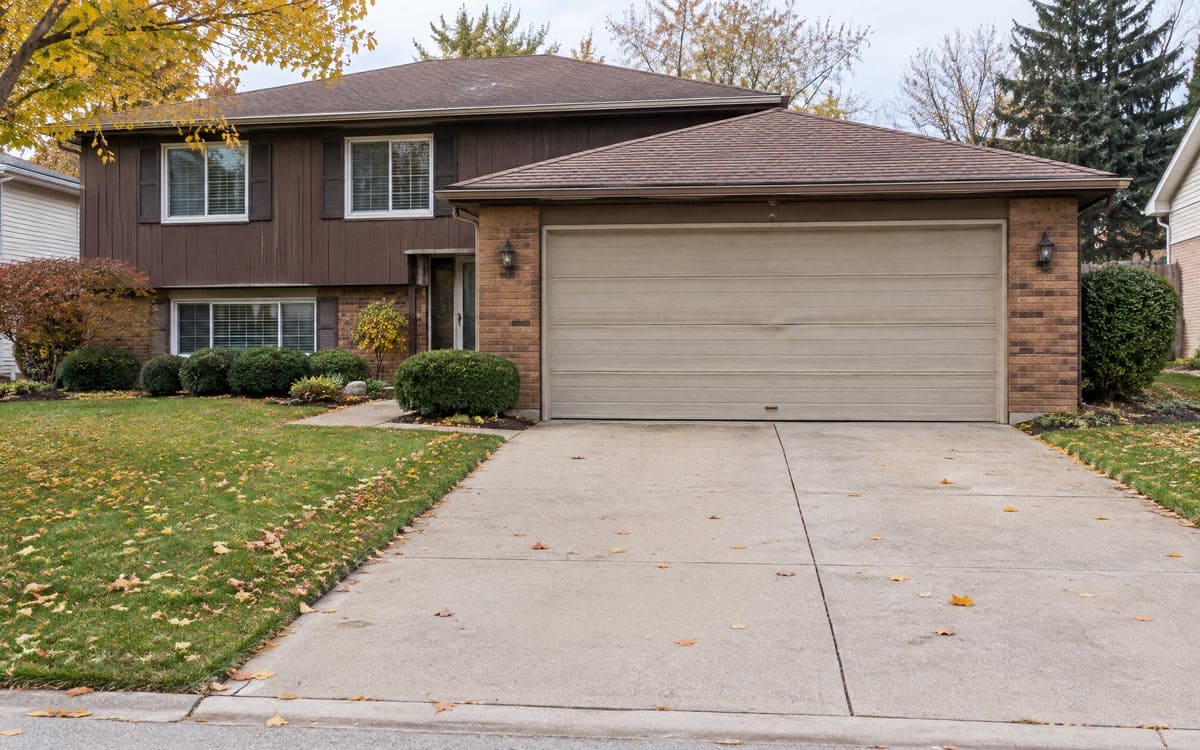
Start with what has failed
A long list of complaints does not automatically mean a new door. One bad roller sounds like a crisis and is a small repair. A split end stile on one section looks cosmetic and often decides the whole door. Before anyone talks about replacement, the right first move is a count of the parts that still work and the parts that do not.
The median year built for housing in Barrington is 1971, and about 67 percent of the village's housing units were built before 1980. A fair share of garage doors in town have been through more than one owner, more than one opener and more than one winter season. How repair prices add up walks through which failures tend to drive the biggest numbers.
One broken part on a sound door gets fixed
When a single part has given up on a door that otherwise balances well, closes squarely and seals at the floor, the right call is to fix the part and move on. A broken spring on a six-year-old steel door with sealed rollers and a good opener is a straightforward spring repair.
The same logic applies to a snapped cable, a bent hinge or a worn roller set on a sound door. Replacing one worn part on a working door is almost always cheaper than replacing the whole door, and it buys years before the next decision.
Confirming a door is sound takes about ten minutes with the opener disengaged. A technician looks at every section for stress cracks around hinge screws, works a hand along each stile for soft spots and splits, checks the top and bottom brackets for play, and finishes with a balance test. If the door passes those tests, the broken part is worth fixing on its own; if any test fails, the replacement conversation starts.
Missing parts can make the call for you
A door can only be repaired if the parts still exist. When sections no longer match the manufacturer's current line, when the model is discontinued and no cross-reference exists, when the hinges are a shape no one makes anymore, the door starts to pull itself toward replacement. Replacing one section works only when a close enough section can be found.
Older doors are also harder to find springs for, in the exact wire size, length and inside diameter. A spring can usually be ordered to the right size, though the lead time can stretch out. When parts are the obstacle, the question stops being whether we want a new door and becomes whether a new door would arrive faster.
Three repairs in a row is a pattern
A sprinkle of repairs over the life of a door is normal. Three repairs in two or three years, on different parts of the door, is a pattern. The rollers go, then the opener's drive gear, then a cable, then a section. By the fourth call, it is time to price a replacement and compare the number against the running total of repairs.
The frequency is the signal. A door that ran quietly for years and has needed something every few months since then has aged past the easy fixes. Fitting a new door at that point gives you new sections, new hinges, new rollers, springs sized to the new door and a modern opener and sensor set to go with them.
An opener with no sensors tips the balance
A garage door opener without photo-eye sensors is from a different era of safety requirements. If the door is otherwise fine but the opener still has no sensors and no auto-reverse worth the name, the opener gets replaced on its own. If the door is also worn, the pair gets replaced together. A new opener sized for the current door is a safer piece of hardware than any patch applied to a very old one.
An opener that has given up its logic board and is missing remotes that can be bought is a candidate for replacement even on a sound door. Older control boards sometimes have an exact match available, and sometimes do not. A technician on the visit can tell whether the opener in front of us has a future or whether a new one would be the better spend over the next decade.
A Barrington historic district house adds a step before replacing
A house in Barrington's Historic Overlay District, developed in 2001, requires a Certificate of Appropriateness in addition to a building permit for any exterior modification to a structure or site in the district; the Architectural Review Commission reviews changes, and smaller projects such as replacement roofs or windows may be approved administratively when no historic or original materials are removed. Village staff will say what review a given door change needs.
For a contributing garage, the design guidelines say garages and outbuildings should be repaired with materials matching the original in design, dimension, profile and texture, that any overhead garage door that mimics the original wood door in those respects will be considered, and that glass-and-wood doors are more appropriate than doors without glass. Call Village staff before the order goes in. What the district's guidelines say covers the detail.
Attached homes and associations can narrow the choice
About 68 percent of Barrington's housing units are single-family detached homes, with another 9 percent single-family attached. An attached townhouse or an association-managed home may have rules about door color, panel style and window layout. Those rules narrow the choices for a new door and sometimes rule out certain overlays or finishes.
The time to find out is before the quote. A homeowner replacing a door on an association property should check the covenants and the architectural committee rules for the development, and bring that information to the quote appointment.
What a replacement brings with it
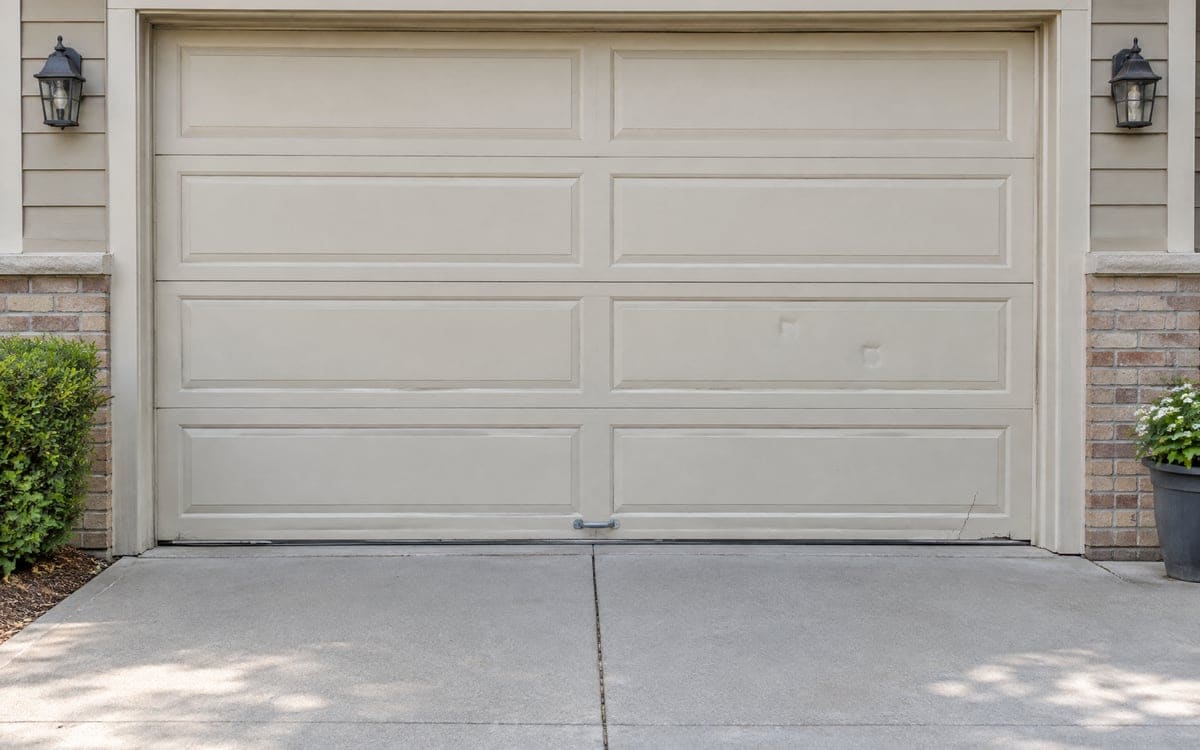
A new door changes more than the look of the house. Choosing a new door means new sections, new hinges, new rollers, new springs sized to the door and new weather seals around the opening. On many jobs the drums and the opener's connection to the door are also new. The result is a door that balances, closes squarely and seals properly from the first morning.
A full replacement is also the chance to add insulation, pick a quieter roller type, choose a wider or taller door if the opening allows, and match the look of the house. For a Barrington home that has gone through two or three doors over its lifetime, a replacement that fits the house (and not only the opening) is often a bigger step up than another repair would be.
A decision table for the kitchen counter
| Situation | Lean | Why |
|---|---|---|
| One broken part on a sound door that still balances and seals | Repair | A new part restores a working door |
| Three repairs in two or three years, each on a different part | Replace | The pattern is wider than any single fix |
| Sections cracked at the stiles or hinges | Replace | Section strength is the whole door's strength |
| Model discontinued, no section match | Replace | Replacement parts constrain the repair |
| Opener without photo-eye sensors | Replace the opener; the door depends on its condition | Safety hardware is from an older era |
| Door still runs, insulation is wanted | Repair, then plan the replacement | New seals and a kit cost less than a new door |
| Historic district house with a contributing garage | Ask Village staff before deciding | The Village's review rules apply to exterior changes |
| Door is sound, opener is tired | Replace the opener | A new opener sized to the door is a known gain |
Older houses often need both the look and the hardware thought through. The same table on a 1920s bungalow and on a 2008 colonial produces different answers.