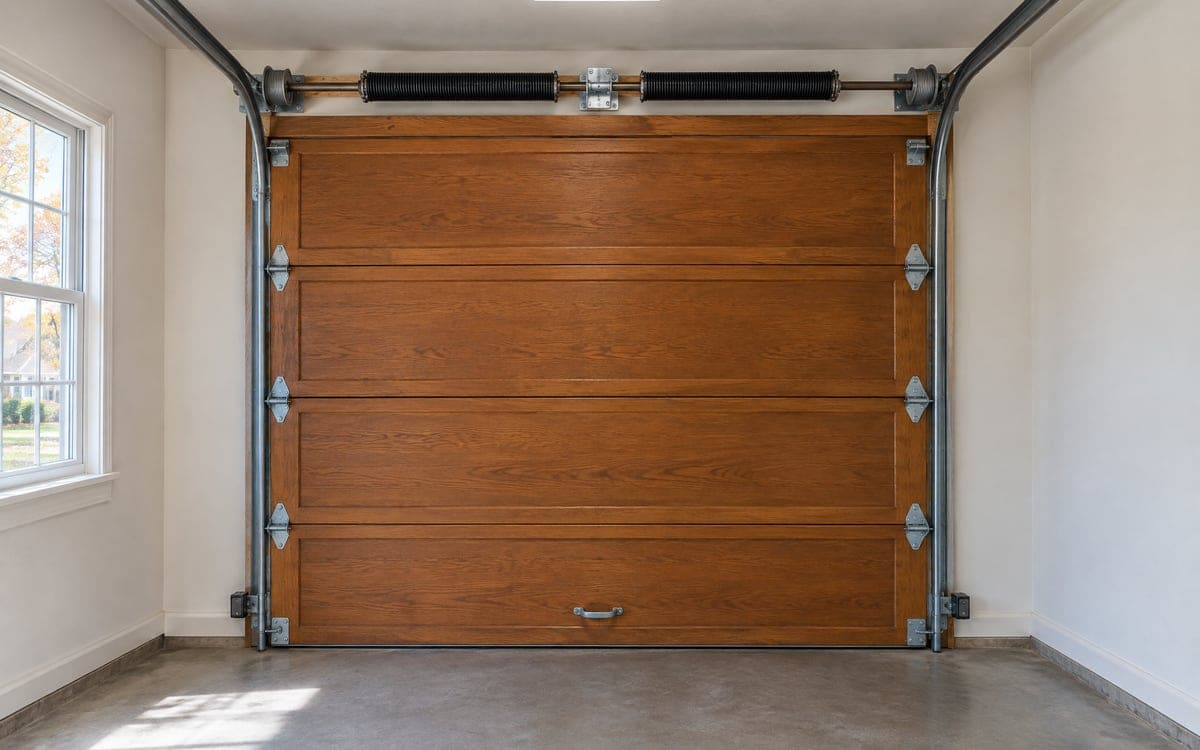
The spring on the shaft carries the door
A torsion spring sits on a steel shaft above the door, held in place by a stationary cone against a header bracket and a winding cone at the other end. The shaft runs across the full width of the opening, with a cable drum at each end. The spring is wound tightest with the door closed. As the door opens, the spring unwinds, turning the drums so the lift cables wind on and raise the door. Closing the door reverses the motion: the cables unwind off the drums and the spring winds back up against its stop.
The spring stores all the lifting force. The opener does not lift the door; it moves a door that is already almost balanced by the spring. A spring sized a touch light makes the opener struggle, and a spring sized too heavy fights the opener on close. When the sizing is right, the opener barely works.
The spring carries full tension while the door is closed, so adjusting, unwinding or replacing a torsion spring is never a homeowner step. Any work on the shaft, the cones or the drums belongs to a technician with the right winding bars. Our spring repair page covers the visit itself.
Wood doors weigh more than steel, and the spring follows
The Village's Historic Overlay District Design Guidelines say that garages and outbuildings should be repaired with materials matching the original in design, dimension, profile and texture, and that an overhead garage door mimicking the original wood door in those respects will be considered.1 That rule applies inside the Historic Overlay District, and Village staff can say how it reads for a particular garage. A wood door, including a wood or composite overlay door, carries a lot more weight than a thin steel panel of the same dimensions, and a spring on a wood door has to lift that extra weight.
Weight is the first number for sizing the spring. The replacement is sized to the door's measured weight, not to a generic chart for a steel door of the same dimensions.
Door height matters too. A seven-foot door and an eight-foot door of the same width and material need different spring lengths because the cable drum turns a different number of times. Older garage openings can have non-standard heights, and sizing by what is actually there is the only way the spring works right the first time.
Wire size, length and the drums
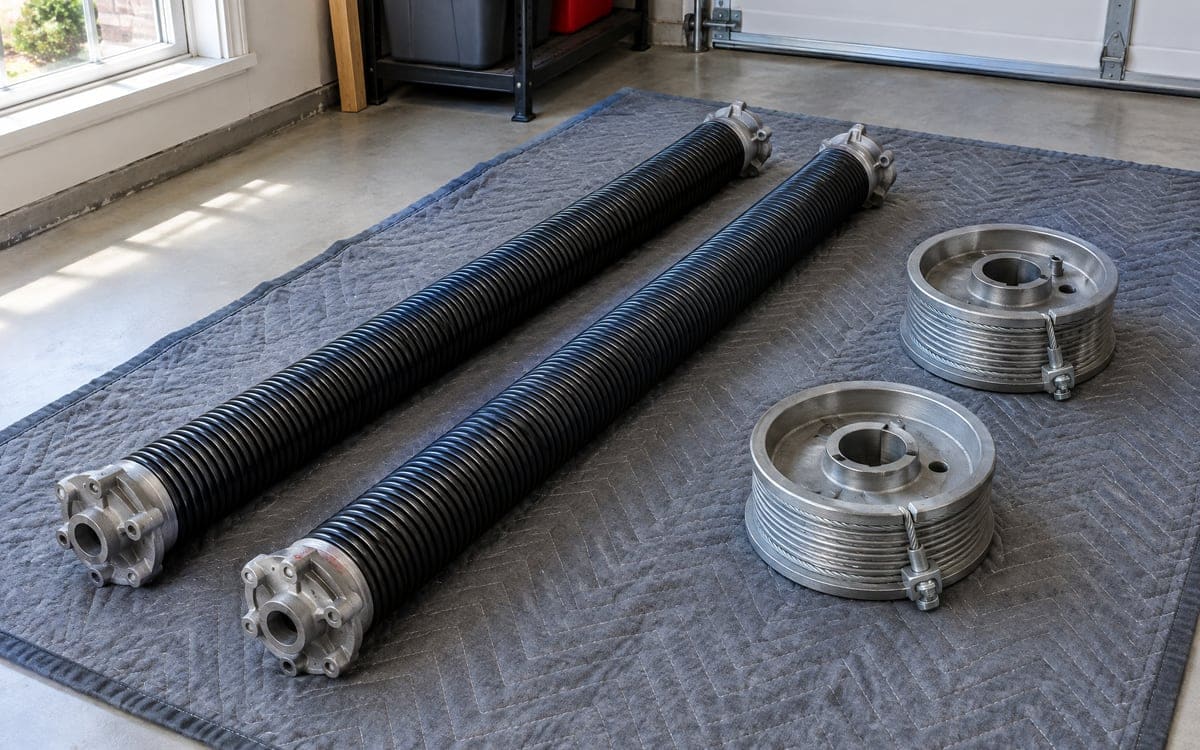
Three numbers describe a torsion spring: wire diameter, inside coil diameter, and overall coil length. Add the drum diameter on the shaft and you have the full lifting system.
A heavier wire can store more force per coil and take more winding. The inside diameter is the geometry of the coil and has to match the winding and stationary cones the spring is fitted to. Overall length is how many coils are there, which controls how many turns the spring can wind before its stop. On the shaft, drum diameter decides how much cable the shaft takes in per turn, translating winding into door height. Change any one of them and the lift changes.
For a heavy wood door, we often step up the wire diameter or lengthen the spring so the lifting force matches the weight without pushing the winding turns past where the spring was designed to stop. Dropping to a thinner wire to make a lighter car-door spring fit a wood door is the kind of shortcut that leads to a short service life and a door that drops.
Why both springs go in together
Most residential doors wide enough for a standard two-car opening use two torsion springs on the shaft, one on each side of the center stationary bracket. When one of those breaks, the other is near the end of its service life because both have been through the same number of open and close cycles. The second is almost always next.
Replacing both together is the standard for that reason. Swap one and the lift becomes uneven, with the fresh spring stronger than the tired one, and the door drifts sideways or goes off track. On a single-spring door that math does not apply, but a single spring on a heavy wood door often means an undersized system from the start.
Converting older Barrington doors from extension springs
A conversion to torsion springs moves the whole lifting system from the ceiling tracks up to a shaft at the header. In Barrington, an estimated 575 housing units, about 13 percent, were built in 1939 or earlier,2 and homes from that era often still carry extension-spring doors over the horizontal tracks that are candidates for conversion if the geometry works.
The reason to convert comes down to containment: a broken torsion spring stays on the shaft, so the system does not need the safety cables an extension setup needs. Our guide to safety cables on extension springs walks through the hazard that cables address. Conversion is not always possible on an older garage; the headroom above the door has to allow for the shaft, and some low-framed older garages do not have the clearance. On those, cables are the right call rather than a conversion.
Spring sizing cheat sheet for a heavy wood door
| Variable | What it does | Why it matters on a heavy wood door |
|---|---|---|
| Measured door weight | Sets lifting force needed | Wood weighs more than steel of the same size, so a steel-door chart is wrong |
| Wire diameter | Sets force per coil | Heavier wire for heavier door; too thin cuts service life |
| Coil length | Sets number of winding turns | Short springs can wind past their stop on tall or heavy doors |
| Inside diameter | Must match the cones the spring is fitted to | A spring and cones with mismatched inside diameters damage each other |
| Cable drum diameter | Translates winding into lift height | Taller openings need matched drums or the door will not close evenly |
| One spring versus two | Shares the lifting force | Two springs on a wide heavy door, replaced together |
Heavy duty torsion springs on a wood door
Heavy duty torsion springs are higher-cycle versions of the same part, built from a wire sized to take more open and close cycles before the metal gives up. On a garage used every day, that upgrade can be worth it on a heavy wood door. The sizing still has to match the door weight; a higher-cycle spring on an undersized wire is still an undersized spring. We talk about the trade at the door.
Winter checks on a wood door
A heavy wood door on an uninsulated detached garage runs through a long Barrington winter. Our page on springs through the cold season walks what the climate figures do and do not say.
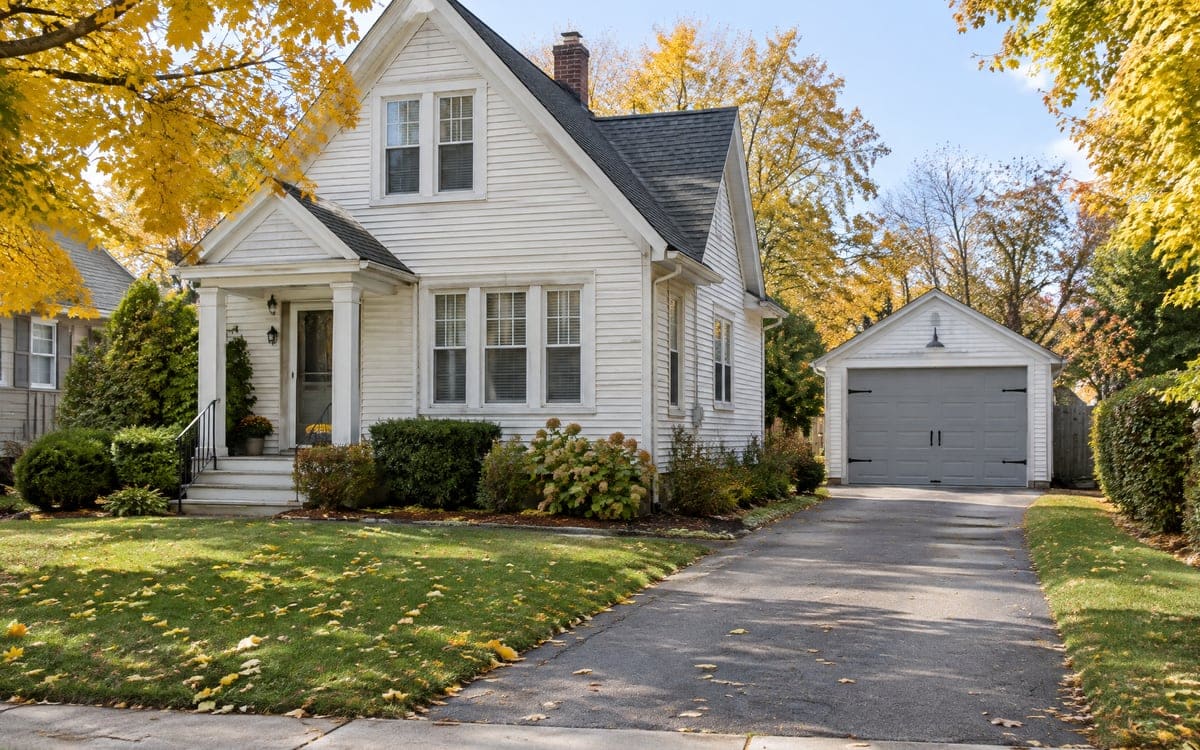
If the door came with the house, the age of the house tells you something about what spring system to expect. Our notes on repairs by era on older Barrington homes walk through the doors and spring systems typical of each decade of housing.
When a worn cable shows up with a spring call
A torsion spring is one part of a lifting system that includes cables, drums and tracks. If the springs are tired, the cables they pull on usually are too. The cable repair page covers lift cables, because those have their own symptoms. On a spring call for a heavy wood door, the technician looks at all of it before quoting.